
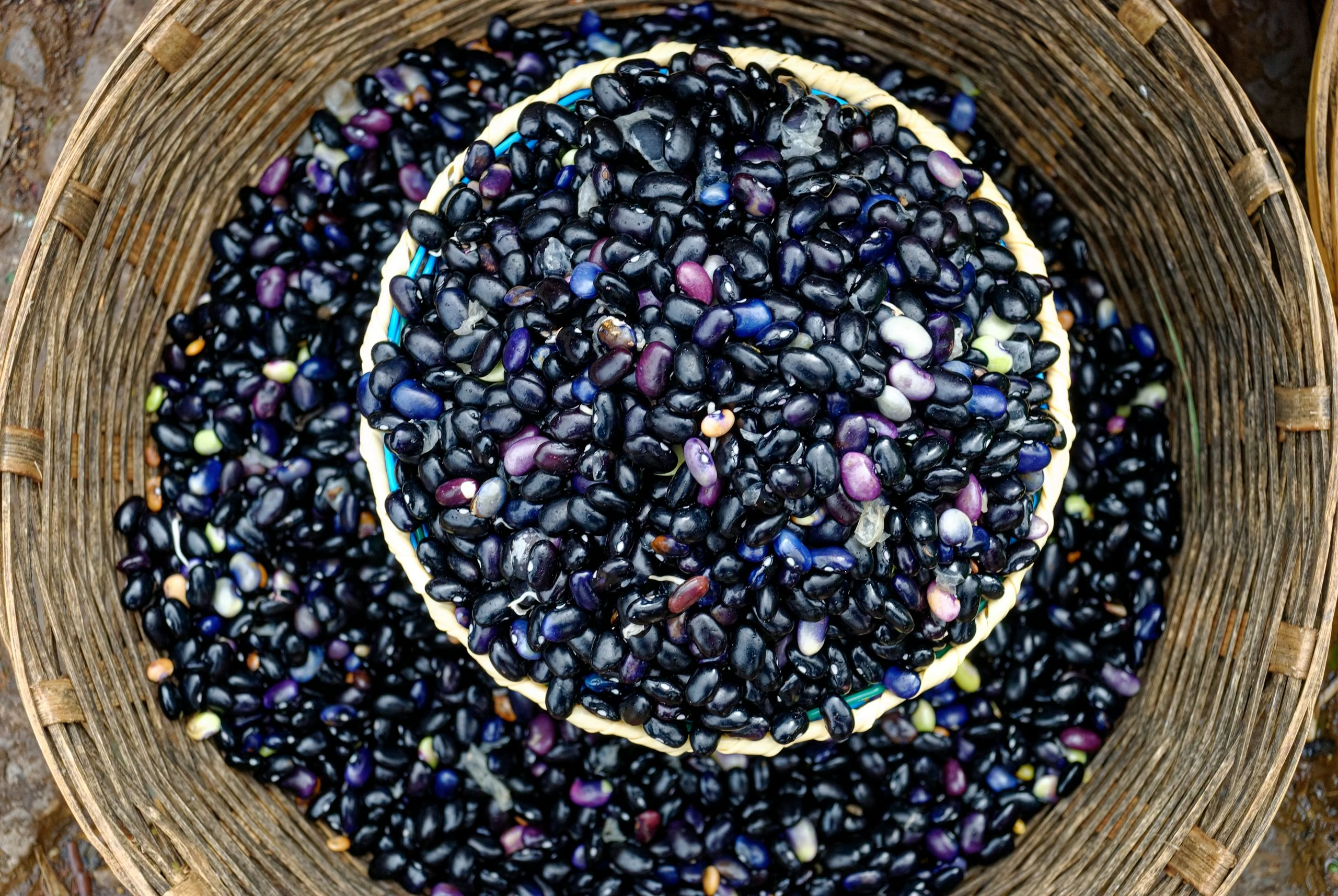
Discover the Ancient Art of Fermenting Black Beans: Health Benefits, History & Easy Homemade Recipes
Our Observations
- Fermented black beans are salted, fermented black soybeans (douchi), not the black turtle beans in Latin American cuisine. They bring whirlwind-focused umami, salty, and pungent notes that light up sauces, stir-fries, and marinades.
- Their origins go back to ancient China and have permeated Cantonese, Sichuan, Hunan, and Taiwanese cooking, as well as diaspora communities around the world. Try out different regional styles and brands to discover what you like best.
- Fermentation by these beneficial microbes pre-digests proteins and starches, making them easier for our systems to digest while creating probiotics and enzymes. Use sparingly, and they’ll give vegan and meat dishes alike a deep, expansive flavor without taking over.
- Use only dried black soybeans, not canned or cooked. Break the skins to start fermentation. Add a starter culture and open jars daily to relieve gas. Label your jars and refrigerate once fermented to keep the shelf life up to six months.
- Rinse beans to temper salt, then combine with garlic, ginger, and chili for traditional flavor profiles, or stir into broths, dressings, and pasta sauces for a fusion twist. Balance other salty ingredients accordingly.
- Have a jar at the ready as a stealthy umami amp for daily fare, from tofu and greens to fish and pork. I mine fermented black beans, so I generally begin with about half a teaspoon per serving, taste, and then scale accordingly.

- Traditional Black Fermented Beans – An exciting addition to your Asian-inspired meal plans these dried fermented black beans, or douchi, can be used with stir fry, steam, and so much more.
- Savory, Salty Flavor Profile – Whether you’re eating them whole or crafting a fermented black bean paste our beans boast an authentic Chinese flavor that’s carefully balanced between salty and savory.
- Whole, Chopped, or Minced – These dry fermented black beans can be added to tons of great recipes and taste amazing in wonderfully unique ways including minced up, pureed, chopped, or even whole. You’ll love their amazing umami flavor and texture.
- Pair with Strong Seasonings – Our black beans fermented flavor boasts a uniquely strong flavor which means they pair perfectly with tons of other big, bold seasoning flavors including things like ginger, garlic, or spicy chiles.
- Easy to Rehydrate and Cook – Apexy fermented black beans are dehydrated and come in a freshness sealed bag, so all you have to do is add a little water, get them mixed up with your favorite recipe, and enjoy!
Last update on 2026-10-01 / Affiliate links / Images from Amazon Product Advertising API
Fermented black beans are salted and preserved soybeans used to add umami depth in Chinese and other East Asian cuisines. Crafted by inoculating cooked soybeans with molds, then salting and drying, they provide pungent, salty, and earthy flavors.
Chefs like to include them in stir-fries, braises, and sauces for powerful seasoning, in very small quantities, roughly 5 to 10 grams per meal. To steer savvy usage, the post discusses flavor, preparation tips, shelf storage, and quick recipe instructions for weeknight menus.
What Are Fermented Black Beans?

Fermented black beans are black soybeans preserved with salt and naturally fermented, known as douchi in Mandarin. No, they’re not some sort of black turtle bean from Latin cuisine. Each bean is salted, a bit soft, mostly dry, and frequently covered with a thin crust of salt.
In small doses, they energize sauces, enhance steamed fish or tofu, and add depth to stir-fries, with heavy umami, a salty tang, and a subtle pungency present in nearly every Asian kitchen.
1. The Origin
Douchi has an ancient history, dating back more than 2,000 years in China, with some of the earliest records referring to its use in Sichuan and Hunan provinces, where douchi-infused bold, savory seasonings are popular.
Chefs employed it as a mini pantry to flavor meats, veggies, and tofu, like a concentrated, salted spice. Cantonese and Taiwanese cooks shaped distinct uses: think black bean–garlic clams, steamed spare ribs with black beans, or tofu with chili-douchi sauce.
As Chinese diasporas grew overseas, douchi went with them, planting flavor, nostalgia, and identity in eateries and family tables from Vancouver to London and farther afield.
2. The Process
Begin with dried black soybeans, not canned beans. Soak to hydrate, then boil to tender. Drain well. Add salt and, in certain traditions, spices such as ginger or dried hot pepper.
Gently crush or crack the beans to split the skins. This aids the culture in accessing the inner starch and proteins. Add a starter culture, usually from previous batches or good environmental molds or bacteria around clean kitchens.
Then jar the beans with enough salt to discourage spoilage organisms. Ferment at cool room temperature. Let the jar burp frequently to release accumulated gas. Carbon dioxide trapped under pressure can explode, creating a hazardous mess.
Once fermented, dry or salt the beans and store them in an airtight container.
3. The Varieties
There’s traditional douchi, which has a simple, salty umami flavor, spicy ones blended with chili flakes, and combinations with ginger or orange peel. A few manufacturers add Sichuan pepper for a numbing jolt.
Black soybeans for douchi are not the same as the yellow soybeans used for other ferments such as doenjang, and they’re altogether distinct from black turtle beans found in Mexican fare. Expect regional shifts: Sichuan-style tends to be hotter and more aromatic.
Cantonese-style leans cleaner and a bit sweeter. For home cooks, pick up a small bag at an Asian market. Explore brands or craft jars; a teaspoon can turn a dish from bland to vibrant.
4. The Science
Fermentation is an organism-led transformation carried out by beneficial molds and bacteria that produce probiotic metabolites. Enzymes from microbes break proteins into peptides and amino acids, and starches into simpler sugars, thereby increasing digestibility and nutrient release.
Glutamates and nucleotides soar, piling up umami. Salt controls microbial growth, inhibits pathogens, preserves flavor during storage, and influences texture and water migration.

- Raw Green-Core Black Soybeans – Whole black soybeans with a dark skin and green interior, made for rinsing, soaking, and full cooking before eating. A fitting pantry ingredient for homemade soy milk, porridge, soups, bean rice, and traditional cooked bean dishes.
- Selected From Planting to Processing – Sourced from Chaoyang, Liaoning, China, and sorted through machine selection plus manual layered screening. This helps deliver cleaner-looking, more consistent beans for buyers who care about appearance and preparation experience.
- Color Change During Soaking Is Expected – The dark skins contain water-soluble plant pigments, so rinse or soak water may show a reddish tint. This is a normal characteristic of black soybeans and does not by itself indicate added coloring.
- Reusable Sealed Jar, 2000g Net Weight – Packed in a resealable jar that is easy to open, close, and store between uses. The 2000g size is practical for households that regularly prepare soy milk, porridge, soups, or cooked beans.
- China Organic Certification Note – Certified China Organic / certified organic by Chinese authorities; this product is not USDA Organic. Ingredients: black soybeans. Contains: Soybeans. Store sealed in a cool, dry place.
Last update on 2026-10-01 / Affiliate links / Images from Amazon Product Advertising API
Unlocking the Flavor
Fermented black beans give you layered umami, solid salt, and a clean, sharp bite. A six-month cure develops a bold, complex flavor—somewhere between parmesan and olives—certainly unique. Tiny quantities serve as flavor boosters in sauces, stir-fries, marinades, and even dressings.
Begin with 5 to 10 grams per 500 grams, taste, then adjust. To balance the acidity of rice vinegar, counter it with the fat of sesame oil or the sweetness of a pinch of sugar.
Mash for immediate release, or leave whole for gentler release. They add body to runny sauces due to their concentration.
Umami
The underlying umami flavor emerges from amino acids, primarily glutamate, created as microbes ferment soy proteins. That transformation intensifies flavor, which is why a small handful of beans can redefine a meal.
For plant-forward cookery, they construct a backbone without stock or meat. Stir 1 teaspoon of rice vinegar with 1 tablespoon of neutral oil, then whisk into a squash soup for depth. Stir into miso-free ramen broth to enhance body without haze.
Pair them with tofu, pork, mushrooms, or eggplant to boost umami. Mapo-style tofu gets nuance when you add one to two teaspoons of bean paste. A mushroom stir-fry made with shiitake and oyster mushrooms becomes rounder in flavor when you sauté one teaspoon of mashed beans alongside the aromatics.
Sneak them into broths, pan sauces, and soups. Stir in close to the beginning for complete incorporation or late for punchier notes. My light chicken stock, which has only half a teaspoon per 500 ml, seems fuller but not heavy.
Salty
Salt keeps the beans and gives them flavor. It stabilizes the long fermentation that generates complexity.
Consider these as flavoring, not volume. Reduce soy sauce or fish sauce elsewhere to avoid stack-up. In a 300 g stir-fry, replace 1 teaspoon of soy sauce with ½ to 1 teaspoon of mashed beans.
If necessary, rinse under cold water for 5 to 10 seconds to reduce saltiness. Pat dry to stay sea-friendly. You still retain the umami while softening the brine.
Pungent
Fermentation and additional aromatics create a keen, aromatic sizzle that comes across as savory and a little bit funky. It’s the note that underpins Chinese black bean dishes, from provinces to palaces, and the occasional ancient tomb, for over 2000 years.
Create classic flavor profiles with garlic, ginger, and chili. For a fast sauce, fry 1 teaspoon of beans with minced garlic and ginger. Add chili, a splash of Shaoxing wine, and 50 ml of water. Simmer to coat greens or tofu. Use lightly so you don’t smother tender fish or baby spinach.
Stir into a vinaigrette of chile oil and rice vinegar for a punchy dressing or whisk into olive oil and vinegar for grilled vegetables. They sparkle outside of China and appear in Korean banchan, Filipino sautés, and Indonesian stir-fries.
With seasonal vegetables, their fascination is organic and consistent. Cache a jar; they extend weeknight cooking miles.
A Nutritional Profile

Fermented black beans, which are soybeans that are salted and inoculated to ferment, provide a nutrient-dense flavor with a hit of umami. They bring umami richness to plant-driven dishes and foster digestive health while staying lean and manageable in size for everyday cooking.
| Nutrient/Property | Typical Value (per 172 g boiled black beans) | Why it matters | Notes for fermented black beans |
|---|---|---|---|
| Energy | 227 kcal | Steady fuel for daily tasks | Fermented forms are used in small amounts, so calories per serving are far lower |
| Protein | 15 g | Supports tissue repair and growth | Fermentation does not add protein; pairing with grains improves amino acid balance |
| Fiber | 15 g | Supports gut motility, fullness, and glycemic control | Whole beans give bulk; fermented paste or whole fermented beans add flavor more than fiber |
| Fat | 1 g | Low total fat aids weight management | Added oils in dishes change totals |
| Folate | 64% DV | Key for cell division; supports pregnancy and recovery | Fermentation may retain folate, but serving sizes are small |
| Copper | 40% DV | Enzyme function and iron transport | Remains present; watch sodium in fermented products |
| Thiamine | 35% DV | Energy metabolism and nerve function | Heat during cooking can reduce some losses |
| Manganese | 33% DV | Antioxidant enzymes and bone health | Still meaningful in mixed meals |
| Minerals (iron, calcium, magnesium) | Present in soybeans | Red blood cells, bone health, muscle and nerve function | Bioavailability varies; vitamin C aids iron uptake |
| Antioxidants | Polyphenols, anthocyanins | May help lower oxidative stress and chronic disease risk | Dark color signals anthocyanins; fermentation can modify profiles |
| Probiotics/enzymes | Lactobacilli, Bacillus; proteases, amylases | May support gut microbiota and digestibility | Live counts drop with high heat; enzymes still aid flavor release |
| Sodium | High in fermented products | Flavor and preservation | Balance with fresh vegetables and low-sodium sides |
Fermentation transforms how we consume black beans. A full cup of boiled beans packs protein and fiber. A serving of fermented black beans is about 5 to 10 grams, mixed into a sauce or stir-fry, adding huge flavor with minimal calories.
They are a nice fit for vegans and vegetarians looking for umami without fish sauce or meat stock. A teaspoon of tofu, mushrooms, or eggplant adds depth quickly. For glycemic control, the fiber in whole beans helps slow starch breakdown and curb blood sugar spikes.
When served over a bowl of brown rice and greens, you receive steady energy and sustained satiety.
Gut support via fermentation byproducts. Even if you sauté fermented beans in a wok, lingering enzymes and peptides can still mold flavor and digestibility. To preserve any possible live microbes, fold a little into warm—not boiling—sauces or use as a finishing paste.
For iron and calcium, combine with vitamin C sources, such as bell peppers or citrus, and with tofu or leafy greens for additional calcium.

- [High-quality material]Made of high-quality 304 stainless steel, more healthy, no rust, no deformation, easy to clean, odorless, don’t worry about harmful substances, you can use it with confidence.
- [Intimate design] We have installed an oil lift hanging on the wall of the barrel, so that your oil lift has a fixed place, and it is easier and more convenient to take oil.
- [Strong sealing] High elastic sealing lock, built-in silicone ring, good sealing performance, forming a sub-vacuum storage environment in the bucket, no fear of bumpy journeys.
- [Two accessories] Fully sealed lock / one-way exhaust pipe, we match two kinds of accessories for you, don’t worry about choosing, different accessories have different purposes, there is always one that can meet your needs.
- [Wide range of applications] Not only can be used for beer fermentation, grape fermentation, enzyme fermentation, fruit fermentation, but also can store various liquid foods, such as oil, milk, water, beer, wine
Last update on 2026-10-01 / Affiliate links / Images from Amazon Product Advertising API
How to Make Fermented Black Beans
Home fermentation is easy with attention and sterile implements. Go to dried black soybeans for real texture and flavor, just a little damp still, tender and pungently umami, like in most southern Chinese (Cantonese) kitchens.
Keep a checklist: sort beans, rinse, soak, boil and simmer, season, inoculate with starter, pack, ferment at warm temperature, burp jars, and move to cold storage. Work tidily, maintain the temperature between 18 and 24 degrees Celsius, and date jars to monitor time and shelf life.
Ingredients
- Dried black soybeans (not turtle beans): the required base. Their protein and sugars feed fermentation and create that rich umami.
- Non-iodized salt, at two to three percent of the bean weight, controls microbes and drives flavor. Iodine can prevent fermentation.
- Water, chlorine-free, supports brine and prevents off-flavors. Boiled and cooled or filtered works.
- Starter culture: 2 to 4 tablespoons of whey, kombucha, or active vegetable brine per 500 grams of cooked beans. This seeds lactic acid bacteria for a trustworthy launch.
- Optional spices: garlic powder for sharp warmth, cumin for earthy depth, minced cilantro stems for fresh lift. Use light doses so the beans stay versatile.
Measurements for recipes using fermented soybeans (per 500 g of cooked beans) are essential for achieving the right flavor in traditional dishes.
- Dried black soybeans: 250 g (yields ~500 g cooked)
- Water for brine: 200–250 ml, as needed to moisten
- Non-iodized salt: 10–15 g
- Starter: 30–60 ml
- Garlic powder: 1 to 2 grams, cumin: 1 gram, cilantro stems: 5 to 10 grams, minced
Equipment
Take a large pot, a strainer, a mixing bowl, a masher, and airtight jars (250 to 500 ml). A thermometer helps maintain a temperature of 18-24 degrees Celsius during fermentation.
Wash and dry all tools well and sanitize jars if you can. Clay crocks or ceramic pots provide time-honored results and stable temperatures, though jars are great for small batches.
Instructions
Soak 250 g of dried black soybeans in warm water three times their volume for 24 hours. Switch the water once if it smells beany.
Bring to a boil and boil for 10 minutes. Simmer for 40 to 60 minutes until tender but not disintegrating. Drain well and cool to lukewarm so starters live.
Add salt, spices, and starter. Lightly crush to break open the skins and expose the starches, targeting about 30% split beans.
Fill jars, press to expel air, and leave 2 to 3 cm of headspace. Seal. Ferment at 18 to 24 degrees Celsius for 3 to 7 days. Burp daily to release gas.
Taste on day 3: tangy, salty, slightly funky is right. Don’t forget to date your jars!
Use as a seasoning: add to noodle soups, stir-fries, braised pork riblets, clams in black bean sauce, or Hunan-style tofu. They fuel chile oil with dried red chile flakes and peanut oil.
One cook with 2 pounds in reserve plundered his cookbook shelf and cooked through it quickly.
Storage
Refrigerate in sealed jars after the flavor achieves your preference. Mark with a date; they are good for up to 6 months when cold.
Inspect for off smell, visible mold, or slime before using. The beans remain soft and a little moist, rinsing lightly if the salt is strong. In condiment form or whole, they carry their aromatic spice.
Culinary Applications
Fermented black beans (douchi) provide rich salinity, funk, and consistent umami. Employed in China for more than 2,000 years, they form the foundation of sauces, stir-fries, steamed dishes, and marinades across Cantonese, Sichuan, and Hunan cuisines. They also appear in Korean, Filipino, and Indonesian kitchens.
Rinse to subdue saltiness, then slice or mash with ginger, garlic, and chili. They serve as both seasoning and condiment, and their pulp-like consistency helps thicken runny, starch-free sauces.
Traditional Dishes
Mapo tofu relies on doubanjiang for a base note beneath the doubanjiang fire. Stir the beans into searing oil with garlic, ginger, and chili. Then introduce tofu and broth to produce a glossy, clinging sauce.
Cantonese steamed spare ribs coat small pieces of ribs with a paste of black beans, Shaoxing wine, garlic, and sugar before a quick steam. The beans act as a seasoning and help hold the juices together.
For black bean sauce fish, sear firm white fish, then simmer with a slurry of mashed douchi, soy sauce, scallions, and a little oil to bloom the aroma.
Across the board, chefs combine douchi with pork belly, beef flank, chicken legs, or tofu to add an umami punch. The salty profile balances bitter greens like gai lan, which follows a Chinese idea: bitter meets salty, not sweet.
I like it with either plain rice or springy wheat noodles, letting the starch soak up the sauce and let the umami shine.
Modern Twists
Mix a tablespoon of chopped black beans into a burger patty or plant-based mince for a quick umami boost. Spoon a black bean mayo or perhaps a vegan aquafaba aioli over grilled mushroom or shrimp tacos.
Stir a small amount into tomato pasta sauce as an anchovy replacement for depth without fish. Make dips by blitzing black beans with roasted eggplant, sesame oil, and lemon.
For salads, whisk together a dressing of douchi, rice vinegar, neutral oil, and a little honey. It awakens both greens and roasted roots. A vegan Caesar uses douchi, lemon, Dijon, olive oil, and capers for briny lift.
In bread or savory scones, fold in finely minced beans, scallions, and cheddar to create a mellow, cured-olive flavor.
Flavor Pairings
- Vegetables: Eggplant, bell peppers, bitter melon, broccoli rabe, mushrooms, bok choy
- Proteins: Pork shoulder, beef flank, chicken thigh, tofu, tempeh, shrimp, squid
- Aromatics: ginger, garlic, scallions, dried chilies, fresh chilies
- Liquids: Soy sauce, oyster sauce, hoisin, rice vinegar, Shaoxing wine
- Fats: Toasted sesame oil, peanut oil, and beef drippings for searing.
- Starches: jasmine rice, hand-pulled noodles, udon, and polenta for fusion
Tips: Rinse and chop. Use 5-10 grams of fermented soybeans per 250 grams of protein. Replace soy sauce when you crave salty complexity with texture. Douchi lightly thickens pan sauces, enhancing the flavor of your Asian recipes.
My Secret Weapon
Fermented black beans, or douchi, are my secret weapon for quick, intense umami. A spoonful makes plain food complex. Always have a 200 g jar in the pantry. They keep for months if sealed and refrigerated once opened.
Rinse lightly to reduce salt, then mince. Begin with 3 to 5 g per serving and scale by taste. I sprinkle them in the same way others rely on Za’atar, Tamarind Concentrate, or even Mang Tomas as an all-purpose lift.
Beyond Asia
I fold minced douchi into chili con carne and plant-based chili. It simulates the delicious nudge you’d receive from extended maturation. In a 1-liter pot, 1 teaspoon will do.
Roasted veggies, dig it. Toss potatoes, carrots, or mushrooms with olive oil, black pepper, and a paste of douchi, garlic, and lemon zest, then roast at 220°C until the edges char. It says bold, not ‘Asian.’
It trades for anchovies or miso in vegan sauces. Mix anchovies with capers, parsley, and lemon for a briny tapenade. Stir a pinch into tomato sauce for pasta when you want depth without fish.
I use it on pizza: dot over a white pie with ricotta and broccoli rabe. In salads, whip into vinaigrettes with one part douchi paste, three parts olive oil, and one part vinegar. For sandwiches, stir into mayo for a zippy, savory spread.
Common Myths
Not all black beans are created equal. These are fermented black soybeans, not your typical black turtle beans. Salted soybeans are inoculated and fermented, resulting in a sharp, intensely beany, salty, slightly bitter, and sweet flavor.
Canned beans can’t be fermented. It begins with dried beans so we can manage the hydration, salt content, and fermentation bacteria. Canned beans are pre-cooked and therefore not suitable for sanitary fermentation.
Security lies in salt, dryness, and storage. Buy whole beans from a reputable source, store them in an airtight, cool place, and keep utensils dry. If you’re making sauce, cook it. Heat minimizes microbial risk and anchors flavor.
They’re not too salty or hard to chew on. Rinse, mince, and sprinkle lightly. In Chinese Black Bean Sauce, match garlic to beans at a 1:1 or even 2:1 ratio by weight for balance. It stabilizes salt and heightens aroma.
The Umami Bomb
Consider douchi your umami power pack. Tiny bits fire up the glutamates and nucleotides already in your dish, so flavors pop without simply adding more body.
I use it to season broths, pan sauces, and quick stir-fries. After a pea-sized knob in chicken stock turns it restaurant-dark. A quick sauce of douchi, soy, garlic, and sugar delivers sweet-salty-savory flavor in seconds for tofu stir-fry.
It works on meat and plants. Pork, beef, eggplant, cabbage, beans, and mushrooms all get bass notes. It plays the anchovy role in tomato sauce and the miso role in dressings.
When I want guests to inquire, ‘What is that?’, this is the silent cure. Much like Za’atar or Tamarind Concentrate for others, douchi is the secret behind a clean, complex finish.
Our Conclusion
Fermented black beans provide rich, robust flavor with minimal effort. A little goes a long way. They are salty, funky, with a hint of cocoa and fruitiness. Heat releases their finest aromas quickly.
To make an instant sauce, mash a spoonful of beans with garlic and oil. Season with chili, a dash of rice wine, and a splash of stock. Stir with greens, tofu, or noodles. To use in a slow braise, fold beans into the base with ginger and scallion. They enhance umami and trim decadent fat.
Store them dry in a sealed jar. Rinse lightly to reduce salt. Start with 5 grams per plate, then adjust.
Got a recipe in mind? Leave your concept or pantry roster, and we will help plot the course.

- PREMIUM STARTER KIT FOR THE HOME FERMENTER: Includes all the tools needed to convert a regular (small) mouth mason jar into a fermenting machine! Kits turn 4 jars into fermenters for smaller batches for veggies & fermented garlic, salsa & hot sauces!
- 9 PC KIT INCLUDES: 4 Pickle Pipe Airlock Tops, 4 Pickle Pebble Infinity Glass Weights, 1 Acacia Pickle Packer Vegetable Tamper and Bonus Printed Recipe Book. Become a probiotic vegetables maker and pickling pro with the best supplies and equipment from the #1 source.
- MAKE YOUR OWN DELICIOUS PROBIOTIC SUPERFOODS: Ferment vegetables (carrots, pickles & radishes etc.) in a brine or use your acacia wood pounder to pack tasty dry salted ferments like sauerkraut and kimchi. Good stuff for your tummy and immune system!
- EASY TO USE AND MAINTENANCE FREE: Simply fill jars with veggies and salt or brine, apply Pickle Pebble weights & waterless self burping airlock lid. No need to monitor or burp your jars, your Pickle Pipe airlocks vent gas without letting oxygen in.
- FROM THE MASON JAR ACCESSORIES EXPERTS: Making your own fermented foods is fun and easy when you trust the Masontops name. Step-by-step instructions with beautiful pictures on how to easily make probiotic superfoods at home are included.
Last update on 2026-10-01 / Affiliate links / Images from Amazon Product Advertising API
Frequently Asked Questions
What are fermented black beans?
Fermented black beans, or Douchi, are fermented soybeans that add a rich, savory umami flavor to sauces, stir-fries, and marinades, making them a staple in Chinese cuisine.
How do fermented black beans taste?
They’ve got a very pronounced umami flavor, salty and a little bitter, characteristic of fermented soybeans. There are hints of chocolate and garlic, along with an earthiness. A little bit is a long way. Rinse before using to control saltiness.
Are fermented black beans healthy?
Well, in moderation, black soybeans provide protein, fiber, and minerals such as iron and calcium. Fermenting these distinct beans can aid digestion, but they’re quite high in sodium, so use them cautiously and watch your salt intake.
How do I use fermented black beans in cooking?
Rinse, then mash or mince the fermented soybeans. Bloom them in oil with aromatics like garlic, ginger, and chili. Use in stir-fries, steamed dishes, tofu, or sauces, kicking it off with one to two teaspoons per serving.
Can I make fermented black beans at home?
Yeah, it’s patient care. After soaking and cooking soybeans, particularly black soybeans, they’re inoculated with a koji starter, then salted and fermented for weeks to create delicious ingredients for traditional food.
How do I store fermented black beans?
Store fermented soybeans in an airtight container and refrigerate after opening. These delicious ingredients keep for months! For extended storage, freeze in small batches, especially when using whole salted beans.
What is the difference between fermented black beans and black bean sauce?
Fermented black beans, a key ingredient in Chinese cuisine, are whole, salted soybeans. Black bean sauce combines these distinct beans with aromatics, oil, and occasionally sugar or starch, offering delicious flavors and convenience.


