
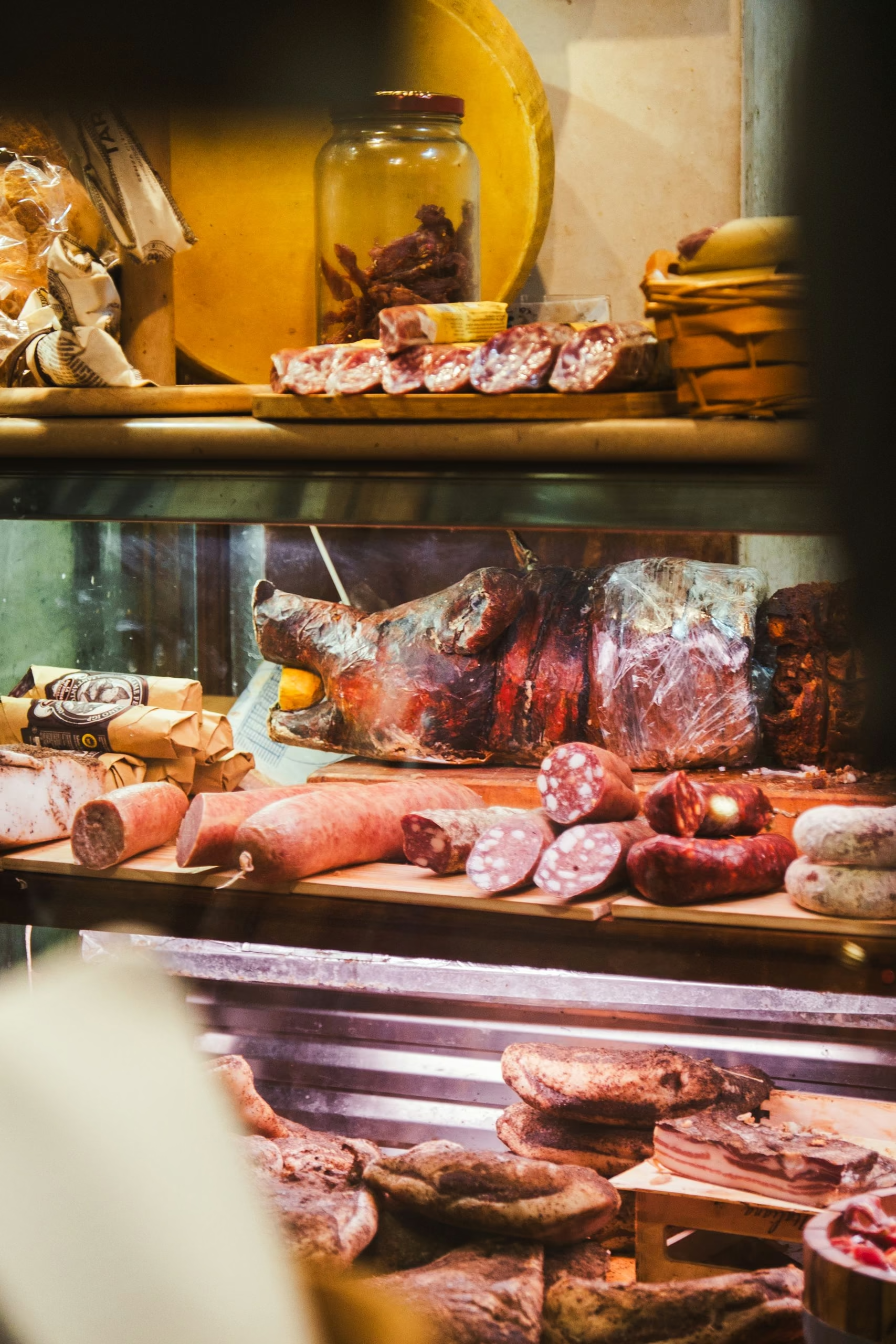
Discover the Fascinating World of Meat Fermentation: Techniques, Benefits, and Safety Tips
Our Observations
- Fermentation changes meat by dropping pH, binding water, and producing antimicrobial compounds that increase safety, shelf life, and intricate flavor. Use calibrated thermometers and pH meters to monitor temperature and acidity during processing.
- Starter cultures like Lactobacillus facilitate acidification, and specific yeasts enhance aroma complexity, so pair strains with your recipe and confirm their performance with periodic pH and sensory testing. Keep cultures cold and measure precisely for dependable results.
- Safety relies on rigorous sanitation, approved curing agents, and hazard control plans that include receiving, mixing, fermenting, drying, and storage. Sanitize your equipment, wear gloves and aprons, and maintain logs of humidity, temperature, and pH.
- Trace a transparent flow from meat selection to dry aging for consistent quality. Select fresh meats, trim uniformly, culture and cure precisely, ferment in controlled environments, and dry and age with controlled airflow and humidity.
- Keep it from spoiling by enforcing cleaning schedules, checking for discoloration or off-smells, and immediately quarantining suspect batches. Train teams with CCP checklists and corrective actions.
- Craft a dependable toolkit with a grinder, stuffer, precise scales, a fermentation chamber, racks, and easy-to-clean tools. Choose ergonomic designs, store neatly, and calibrate regularly for safe and efficient production.

- Food pH Meter for Canning: When canning season arrives, use Food pH tester to test the pH value of meat, fruits, and vegetables to help you identify which foods are suitable for water bath canning (high acid <4.6 pH) and which are suitable for pressure canning (low acid >4.6 pH). It is especially important to measure the pH of canned foods such as tomato sauce and hot sauce salsa again before canning for food safety
- Food pH Meter for Sourdough Starter: For home bakers and chefs who like to make sourdough bread, this digital pH meter with Bluetooth function can help you monitor and record whether the pH value of yeast is within the optimal range (3.5 to 5 pH) at any time. Whether baking sourdough bread, making regular bread and pizza dough, use this pH tester you can easily measure the pH value
- Water pH Meter for Brewing and Fermentation: This pH meter has a wide range of applications, such as fermenting foods, making homemade yogurt, craft beer, kombucha, cider brewing, homemade wine, canning pickles, making mozzarella cheese, jams, jellies, chutneys, sausages, sauces, and skin care products. It is a Essential Tool for food processing
- Smart Food pH Tester: This pH meter can be connected to the YINMIK app via Bluetooth. The pH date can be saved on the app while measuring and you can view historical data at any time. At the same time, the pH reader can be set to automatically save data, and can automatically store up to 1,000 data. This pH Test kit is a very convenient tool for people who need to record data
- Easy to Use pH Meter: Smart pH Meter is calibrated before shipment, ready to use out of box, also coming with pH 7.00 and pH4.00 calibration solution, help you easily calibrate the pH level at any time; With backlight display, even in the dim, you also can get the pH readings; With 30ml pH probe protective solution, Always keep probe moist, extend the service lifer of pH meter, With automatic shutdown function
Last update on 2026-10-01 / Affiliate links / Images from Amazon Product Advertising API
Fermenting meat is the use of safe, controlled microbes to drop pH, reduce water activity, and develop flavor while suppressing pathogens.
Popular varieties are dry-cured salami, sucuk, and landjäger.
Key steps include selecting a starter culture, using precise salt and nitrite quantities, and maintaining consistent temperatures between 18 and 24 degrees Celsius and humidity between 75 and 85 percent.
PH typically drops below 5.3 within 48 hours, after which slow drying shapes texture.
To contrast techniques, equipment, and problem-solving, the core text provides detailed instructions.
The Art of Fermenting Meat

Fermenting meat transforms raw protein into a safe, shelf-stable, and complex food by coaxing microbes to acidify, cure, dry, and shield the item. It connects chemistry, craft, and culture, and encourages thoughtful hazard management from beginning to end.
Here’s a pragmatic road with science out in the open and security at the center.
- Select lean, fresh cuts;
- trim and chill;
- grind and dose starter culture;
- cure and season;
- ferment to target pH;
- dry and age under control;
- It preserves, builds flavor, and binds technique to tradition.
It’s a way to connect with the world’s food roots and the health that comes from harnessing wild, domesticated, and yet-to-be-documented microbes.
1. Selecting Meat
Select pork shoulder, beef round, or lamb leg within 72 hours of slaughter at 0–2°C to minimize initial spoilage. Nothing like vibrant color, fresh aroma, and dense, moist texture.
Trim outer silverskin and surplus soft fat to stabilize water activity and texture. Keep tools sharp to prevent smearing that impedes acidification.
Wear cut-resistant gloves, employ non-slip mats, and sanitize benches with 70% alcohol or approved quats. Avoid cross-contact of raw meat with any ready-to-eat areas.
Purchase from audited vendors with temperature logs, pathogen testing, and traceability. Request specifications on fat ratio and pH.
2. Adding Culture
You use defined LAB like Lactobacillus sakei or Pediococcus pentosaceus. They lower pH quickly and outcompete pathogens. Certain blends also incorporate Staphylococcus xylosus for color and aroma.
Rehydrate freeze-dried culture per label, then stir to dose evenly by batch weight. For example, use 25-50 grams per 100 kilograms. Uneven dosing results in slow or patchy acidification.
Maintain frozen cultures at -18°C, with no temperature swings and minimal air exposure. Note lot numbers and expiry.
Sanitize bowls, scoops, mixers, and affirm with ATP swabs.
Unsanitary gear inoculates the bad bacteria.
3. Curing and Seasoning
Salt at 2.5 to 3.0 percent and nitrite or nitrate within legal limits block Clostridium and stabilize color. Sugars such as dextrose feed LAB and adjust acid velocity.
Spices such as black pepper and garlic, along with wine or paprika, define regional styles and maintain water activity. Mix to a uniform paste. A bad mix results in mottled flavor and pH.
Adhere to mandated cure levels and hold times, and record for regulators and auditors. Culture can be molecular, yet still tactile.
Imagine sugars converting to lactic acid, lowering pH, and triggering safety mechanisms.
4. The Fermentation Stage
Maintain 20 to 26 degrees Celsius at 85 to 95 percent relative humidity for fast-fermented styles. Cooler temperatures are required for slow styles. Airflow needs to be mild.
We measure pH at 4, 8, and 24 hours and aim for a value less than or equal to 5.3, typically between 4.8 and 5.2, for safety. That’s when wild, tamed, and unaccounted-for microbes either assist or get benched.
Run daily safety walks: slips, cuts, bioaerosols, electrical, and ergonomic risks. Calibrate probes and log time, temperature, humidity, and pH in your hazard plan.
Fermenting meat is as old an art as civilization. Obvious actions direct an initial batch or perhaps a pro laboratory.
5. Drying and Aging
Switch to 10 to 14 degrees Celsius, 75 to 85 percent relative humidity, and 0.2 to 0.5 meters per second airflow. Racks or hang to expose the surface evenly and avoid case hardening.
Follow mass loss; many a goal lurks around 30 to 40 percent. Inspect for white surface mold, which is acceptable, versus green or black mold, which should be thrown out or trimmed with caution.
Manage humidity to guide texture and safety. There’s something for the self-taught experimentalist to learn here.
Mix cooking instinct, nutritional goals, and even garden herbs while taking notes, checking pH and water activity, and observing industrial hygiene.

- Plastic
- Meat Grinder Universal Pusher/Tamper
- Total Length: 9.45 inch, wide: 1.95 inch
- All Parts Dishwaher safe for easy clean
Last update on 2026-10-01 / Affiliate links / Images from Amazon Product Advertising API
The Microbial Magic
Microbes are the boss in meat fermentation. Lactic acid bacteria and specific yeasts ferment sugars into acids, alcohols, and gas, transforming flavor, aroma, texture, and even safety.
This is an old craft with modern control: people have used fermentation for thousands of years, and more than 5,000 fermented foods exist worldwide.
With meat, it’s all the same core science. Benign microbes drop pH, secrete antimicrobial peptides, and essentially increase shelf life while releasing nutrients.
Beneficial Bacteria
Lactobacillus sakei, L. Plantarum, Pediococcus pentosaceus, and Staphylococcus carnosus are the workhorses in many dry-cured and semi-dry sausages, such as summer sausage.
These bacteria convert sugars into lactic acid, effectively lowering the pH to approximately 4.8-5.2, which helps establish the color and tang of the fermented meat products.
Others produce flavor-active esters and affect texture by controlling proteolysis, enhancing the overall quality of the sausage recipes.
These beneficial bacteria help crowd out harmful microorganisms, ensuring the safety of the meat product. As pH declines and water activity drops during fermentation, pathogens lose their territory.
Many strains excrete bacteriocins, such as pediocin and sakacin, to target Listeria and other spoilage organisms, making them vital for meat preservation.
The choice of starter culture indeed influences the final product. Matching the strain to meat type, salt level, desired pH curve, and fermentation temperature—typically between 20 and 30 degrees Celsius—is crucial. Fast-acid strains provide rapid safety, while mixed cultures can deliver complex flavors but require tighter management.
Moreover, fermented meats offer probiotic benefits. When live cells survive processing and storage, they can provide Lactobacillus, which fuels gut health and equilibrium. Though the evidence remains product-specific, the trend in using fermented meat for health benefits is encouraging.
The Role of Yeast
Specific yeasts, Debaryomyces hansenii and Candida zeylanoides, mold aroma in European-style sausages by lowering surface acidity, producing aldehydes, ketones, and methyl-branched compounds, and assisting color stability with mild oxygen scavenging and nitrate reductase activity.
They round off aggressive acidity and contribute savory, nutty, or milky flavors. Certain strains pair with lactic acid bacteria. Aim for complementary metabolism with moderate deacidification, limited gas, low biogenic amine formation, and no sulfury off-notes.
Monitor yeast vitality via plate counts, qPCR, and sensory inspections. Overambitious yeast can produce surplus ethanol, volatile sulfur compounds, or tacky rinds. Include yeast exposure in safety plans.
Separate inoculation rooms, sterilize equipment, and use strain lot tags to avoid drift or cross-contamination from other products.
Preventing Spoilage
Begin with rigorous hygiene. Aseptic rooms, cooled meat at or below 4 degrees Celsius, disinfected grinders and stuffers, and transparent movement of goods reduce primary microbial contamination.
Manage the obstacles. With salt between 2.0 and 3.0 percent, nitrite within legislative limits, starter cultures, and fermentation at specific temperature and humidity, you can control the decrease in pH and water activity.
The natural acidity of fermentation preserves food better and longer, helping to eliminate food waste by extending the shelf life of excess meat and converting scraps into shelf-stable products.
Check frequently. Look out for slime, sticky surfaces, green or black molds, rancid or pungent solvent odors, uneven coloring, or gas pockets.
Training checklist:
- Raw receipt: verify temperature, color, and pack integrity.
- Prep: sanitize tools; confirm culture ID, dose, and lot.
- Fermentation: log time, temperature, and pH at set points.
- Drying: track mass loss, humidity, and airflow.
- Sensory: daily visual and smell check; isolate suspects.
- Records: hold/recall plan, calibration logs, and cleaning proof.
Fermentation converts sugars and starches into acids, alcohol, or gases, which enhances taste, releases nutrients, and can even benefit your gut by introducing probiotics.
Used since the 1990s in today’s food systems to extend shelf life and reduce waste, investment has exploded, tripling in 2021, underscoring its value and scale.
Essential Tools and Ingredients
Here’s a list of hardware and components that enable a clean process for home meat processing, ensuring exact control and reliable outcomes in meat curing from a home setup to an industrial line.
- Equipment overview: grinders with coarse and fine plates, sausage stuffers, slicers, boning and chef’s knives, cutting boards, mixing tubs, accurate scales with 0.1 g resolution for cures, pH meter, thermometer probes, fermentation chambers or temperature and humidity controlled fridges, glass jars or crocks, fermentation weights made of glass or ceramic, funnels made of glass or stainless steel, food processor, vegetable grater, gloves, aprons, sanitizers, labeled storage bins, and rack shelving.
- Primary ingredients include quality meat, starter cultures such as Lactobacillus and Staphylococcus carnosus, curing agents such as salt and sodium nitrite or nitrate, sugars such as dextrose and sucrose, clean water, spices, and optional antioxidants such as ascorbate.
- Ergonomics: Choose non-slip handles, foot-pedal controls, smooth welds, and dishwasher-safe parts to cut strain and speed cleanup.
- Quick reference:
| Tool | Function |
|---|---|
| Grinder | Particle size control and protein extraction setup |
| Stuffer | Air-free filling and uniform density |
| pH meter | Fermentation endpoint verification |
| Chamber | Stable 18–24°C and 75–90% RH control |
| Weights | Keep contents submerged to reduce mold risk |
| Funnels | Clean transfers to jars, casings, bottles |
Your Basic Toolkit
Base your operation on a solid grinder, lever or gear-drive stuffer, and bowls or tubs big enough for cold mixing. I recommend scales that read to 0.1 grams for cures and to 1 gram for spice loads.
Throw in a dependable probe thermometer and a calibrated pH meter for good measure. Glass jars or ceramic crocks work for small batches, teamed with fermentation weights that keep meat or vegetables submerged.
Steer clear of weights scented with oils, which taint ferment. Glass or stainless steel funnels reduce spills, and a food processor or grater accelerates prep when incorporating vegetables such as garlic or ginger. Organic ginger imparts a clean flavor.
Use cut-resistant gloves, aprons, and non-slip shoes. This guards hands while trimming and grinding. Scrub with food-grade detergents, then sanitize. Avoid biofilms by storing tools dry between runs.
Safely store blades sheathed, cords coiled, and bins labeled. Open areas for all raw, combined, and completed materials minimize cross-contact.

- Pressure Fermentation: This stainless steel conical fermenter features a pressure design to avoid CO₂ overflow during fermentation. Real-time pressure monitoring ensures stable secondary fermentation and richer flavor. It can connect to a yeast bottle for consistent results (yeast bottle not included)
- Efficient Temperature Control: The beer fermenter uses a built-in electronic thermometer for precise control. With a range of 32–104°F / 0–40°C, it displays liquid temperature in real time with no delay, allowing users to adjust conditions promptly for consistent flavor development
- 304 Stainless Steel Construction: Our fermentation tank is made of food-grade 304 stainless steel (0.5 mm thick), sturdy for long-term use. The smooth surface reduces residue buildup and is easy to clean, fully compliant with food-contact standards
- Large Capacity Design: With a 8 gal (about 30 L) capacity, this steel beer brew fermenter supports beer, wine, and fruit wine fermentation. Dual liter/gallon markings make readings clear and convenient without extra conversion
- Professional Fermentation: This conical fermenter includes reinforced handles for easy carrying and height adjustable legs for flexibility. The practical design and dual fermentation function make it ideal for home brewers and small-scale production

Last update on 2026-10-01 / Affiliate links / Images from Amazon Product Advertising API
Curing Agents
Employ top-quality salt as the foundation. It enhances taste and inhibits undesirable bacteria. Add sodium nitrite or nitrate within the legal limits for safety in long cures and to stabilize color.
Weigh with precision scales. Even small mistakes can push residual nitrite outside of safety limits. Store cures in sealed, labeled containers, away from heat and light, and lock them if stored in lockers or communal areas.
Trace lot numbers.
- Wear gloves and avoid skin contact
- Do not mix with acids or cleaners
- Weigh, never “pinch,” and record additions
- Dispose of spills with absorbent, then seal waste
- Rinse tools, then sanitize. NEVER DUMP INTO DRAINS WITHOUT LOCAL GUIDANCE.
Spices and Sugars
Select whole spices and grind fresh for consistent fragrance. Classic sets include black pepper, garlic, coriander, and fennel for salami. Paprika and caraway are for Central European styles.
Mix in small test batches, record percentages, taste after a quick fry test, and tweak heat and top notes. Organic options will run clean profiles. Fresh ginger adds bright lift.
Include sugars such as dextrose or sucrose at precise gram-per-kilogram quantities to nourish starter cultures, not spoilage organisms. Sugar is vital in certain ferments other than meat, such as kombucha or ginger beer.
Keep spices and sugars in sealed containers in a cool, dry, dark place. Mark dates and rotate to maintain potency.
A World of Cured Flavors
Fermenting meat, a valuable preservation method, spans centuries and continents, shaped by salt, time, microbes, and climate. Techniques depend on salting, drying, and regulated fermentation to preserve meat products and construct robust flavor and texture.
European Classics
Europe’s pantry prominently features fermented meats such as salami, pepperoni, and dry-cured hams like Prosciutto di Parma and Jamón Ibérico.
A lot of salami blends pork with beef or lamb, while pepperoni often leans toward beef-pork mixtures. Mediterranean sausage recipes typically use only pork, reflecting the region’s focus on traditional flavors.
Traditional steps in the fermentation process include precise salting to 2.5-3% NaCl, curing with nitrate or nitrite where permitted, and inoculation with lactic acid bacteria to acidify and drive nitrate reduction.
Slow drying at 10 to 15 degrees Celsius with 70 to 80 percent relative humidity is crucial for forming pH levels, water activity, and mold ecology.
Natural casings, meticulous caliber selection, and weeks to months of drying create a distinct snap in the final product. Typical ingredients in these sausage recipes include pork, beef, garlic, black pepper, wine, and herbs, with regional variations featuring paprika, fennel seed, and white pepper.
Safety measures are stringent, ensuring the use of verified starter cultures, calibrated hygrometers, and validated pH drops to 5.0-5.3 in the early days of production. Most producers adhere to HACCP protocols, maintain batch records, and conduct pathogen testing for quality assurance.
Asian Traditions
Elsewhere in Asia, cured meats and fish span Chinese lap cheong (sweet-cured pork sausage), Korean jeotgal (salted seafood), Thai naem (sour pork), and Vietnamese nem chua. Each balances salt, sugar, and acid to stabilize proteins in warm climates.
Agents vary. Rice wine or baijiu adds aromatics and increases microbial activity. Koji (Aspergillus oryzae) and rice bran contribute proteases and amylases that liberate amino acids and sugars, enriching umami and sweetness. Fish sauces and shrimp pastes add halophilic microbes and nitrogenous oomph.
Textures run the gamut from lap cheong’s chewy, a touch oily density to jeotgal’s buttery smear. Some are lightly dried, while others are maintained semi-moist, with lactic tang, gentle funk, and sweet or briny notes.
Workplace safety is central when handling seafood. Strict cold-chain temperatures of 4 °C or lower, segregation to avoid cross-contamination, salinity checks, and sanitation of knives, boards, and grinders are essential.
Modern Innovations
Today’s artisans explore precision fermentation, alternative proteins, and lower-salt paths. Novel lactic acid strains, Staphylococcus carnosus for color and aroma, and protective cultures help control pH and inhibit pathogens. Sensors record humidity, temperature, and water activity.
Data models anticipate safe drying curves. Reformulation is active: substituting pork back-fat with pre-emulsified soybean oil can raise cohesiveness, gumminess, and chewiness while reducing saturated fat. Fermented sausages differ in shape, caliber, and curing method, which in turn affect airflow, acidification rate, and rind formation.
Contemporary QA relies on proven starter cultures, quick pH and a_w meters, environmental swabs, and documented critical limits. Sample small-batch recipes such as classic salami with lamb, a koji-cured beef stick, or a plant-forward LAB-fermented “salami” to taste how microbes, meat varieties, and spices interact.
Comparison Overview
| Region | Typical Bases | Fermentation Agents | Texture/Flavor | Safety Focus |
|---|---|---|---|---|
| Europe | Pork, beef, lamb | LAB starters, surface molds | Firm, nutty, peppery | HACCP, pH/a_w validation |
| Asia | Pork, fish, seafood | Rice wine, koji, halophiles | Semi-moist, tangy, umami | Cold-chain, salinity control |
| Modern | Mixed meats, alt-proteins | Tailored LAB, protective strains | Diverse, experimental | Digital monitoring, rapid tests |
The cured meats, often considered delicious novelty meats, are frequently consumed ‘raw’ on boards or incorporated into sausage recipes and dishes.
Safety Best Practices
Safety in home meat processing relies on detailed procedures from procurement through warehousing, with designated responsibilities, ongoing education, and dynamic monitoring. Start with fresh, cold meat at or below 4°C and clean tools to minimize baseline risk. Diligently control time, temperature, salt, and the pH level.
Controlling Temperature
To ensure safe meat products, keep raw meat at 0 to 4 degrees Celsius prior to grinding to inhibit the growth of harmful microorganisms. The fermentation process and safety best practices are crucial for successful fermentation.
If possible, maintain setpoints in the sweet spot for your starter and style during fermentation. Many meat fermentations run cool, at temperatures between 10 and 18 degrees Celsius, to encourage beneficial lactic acid bacteria while discouraging spoilage organisms.
Temperatures exceeding 30 degrees Celsius (86 degrees Fahrenheit) tend to inhibit beneficial microbes and allow spoilage organisms to thrive, so it’s essential to implement hard alarms.
Utilize calibrated probes, data loggers, and closed-loop controllers. Check thermometers weekly against a traceable reference at the ice point (0°C) and a mid-range.
Map the chamber for hot spots and load the product for airflow. Record temperatures every 30 minutes for the first 24 hours, then hourly. Maintain digital backups and trend review in QA and safety meetings. Gaps or spikes without explanation are nonconformances.
If readings drift, act swiftly: check door seals, adjust setpoints, move racks, and quarantine batches in doubt at or below 2°C until they are retested. Never adopt a wait-and-see approach to ensure the integrity of your home meat processing efforts.

- BOOSTED STARTER KIT FOR THE HOME FERMENTER: Includes all the tools needed to convert wide (large) and regular (small) mouth mason jar into a fermenting machine! Turn 8 jars into fermenters for smaller batches for veggies & fermented garlic, salsa & hot sauces!
- 18 PC KIT INCLUDES: 8 Pickle Pipe Airlock Tops (4 wide, 4 reg), 8 Pickle Pebble Glass Weights (4 wide, 4 reg), 2 Acacia Pickle Packer Vegetable Tampers and a bonus recipe book
- MAKE YOUR OWN DELICIOUS PROBIOTIC SUPERFOODS: Ferment veggies in brine & use your acacia wood pounder for dry ferments like sauerkrauts or fermented garlics & hot sauces. Keep your gut flora nourished economically with this maintenance-free system!
- WEIGHTS HAVE FINGER GRIPS FOR EASY REMOVAL: Pickle Pebbles are easily removed by pinching the handy finger grip and lifting them out. Simply fill jars with veggies etc. & salt or brine and apply weights & airlock lids. Pickling has never been easier!
- FROM THE MASON JAR ACCESSORIES EXPERTS: Home fermentation is easy when you trust the Masontops name! We’ve included step-by-step instructions for our maintenance-free pickling kit. These tools are custom-designed for Mason jars.
Last update on 2026-10-01 / Affiliate links / Images from Amazon Product Advertising API
Monitoring Acidity
Acidification is the primary control in the fermentation process of meat products. Safety requires a pH below 4.6, while many sausage recipes aim for a pH between 4.8 and 5.3 to ensure quality.
Combining pH control with rigorous temperature management and starter cultures is essential for successful fermentation. It’s crucial to track the pH curve, as an early drop in the first 12 to 24 hours indicates healthy fermentation of the meat product.
To maintain quality, record every pH reading along with batch ID, time, probe temperature, and operator initials. Regular logs not only demonstrate compliance but also help diagnose stalls in the fermentation process.
Keeping accurate records on hand during audits is vital for ensuring the safety of your fermented meat.
Additionally, calibrate meters daily using new buffers (pH 4.00 and 7.00) and ensure the probe is rinsed between samples. Staff should be trained to homogenize a small meat sample with distilled water in a one-to-one ratio, avoiding air pockets while recording temperature and pH for optimal results in home meat processing.
Recognizing Problems
Set a daily check routine: smell, look, probe. Red flags are off-odors (putrid, sulfur), unnatural colors (green, black), slimy or sticky surfaces, or visible mold. Monitor salt exactly. Too little salt encourages mold and a short life. For context, vegetable ferments like sauerkraut use 2.25- 2.5% salt and end at pH 3.4- 3.6.
When it comes to meat preservation, the targets differ, but the lesson stands: correct salinity and acidity block harmful microorganisms.
Keep a checklist of symptoms and fixes: a slow acid drop means to verify starter viability, raise the temperature within range, and reseed. Surface mold means to trim if safe style permits; otherwise, discard. A temperature spike means to cool, hold the product cold, and re-evaluate pH and water activity.
Tell staff to quarantine suspect product immediately, tag, and inform. Disinfect utensils and areas to prevent cross-contact. Evaluate the event within 24 hours to revise SOPs for sausage making.
Prevent contamination at every handoff: sanitize tables, knives, and grinders; wash hands; use dedicated bins; and store finished products cold. Check the fermentation process every day and never overlook minor alterations.
The Sensory Journey
Fermenting meat, a valuable preservation method, redefines smell, flavor, and texture in vivid phases. Sensory audits drive excellence, protect security, and help squads study quickly, as differences in microbes, meat type, salt, and spice drive distinct results.
Evolving Aromas
The first hours reek of nascent and a bit metallic. As the lactic acid bacteria assert themselves, bright, yogurt-like tangs emerge. Then come the cured, nutty, savory notes, with a whisper of garlic and pepper or smoke if applied.
Certain batches might have a more pungent aroma due to microbes releasing volatile compounds, which is perfectly normal if clean and balanced.
Aroma shifts come from defined cultures: Lactobacillus and Pediococcus yield lactic tang. Staphylococcus carnosus lays down cured-meat notes through amino acid and lipid metabolism. Molds such as Penicillium nalgiovense contribute mushroom and rind-like complexity externally.
Spice blends modulate this: paprika gives sweet warmth, coriander adds a lemon edge, and wine or rice wine esters.
About the smell test: Use SMELL to flag success or risk. Clean tang and gentle spice indicate love. Harsh sulfur, rotten egg, fecal, or ammoniac scents indicate spoilage or proteolysis. Have staff log aroma daily and correlate deviations with pH, a_w, and temperature records.
Regular whiff tests combined with swabs, pH less than 5.3, and water activity less than 0.90 enhance workplace safety.
Deepening Flavors
Umami develops as microbial proteases break down proteins into peptides and amino acids, making it a key aspect of the fermentation process.
Sour flavors emerge as lactic acid builds up during meat fermentation, while spicy notes mellow over time, with fats transporting capsaicinoids. Fat lipolysis releases fatty acids with buttery, nutty, or cured notes, enhancing the overall flavor profile of fermented meat products.
Substrate counts. Pork fares sweeter, beef is iron-rich and bold, and game is earthy. Carbohydrate type steers sourness: dextrose ferments fast and sharp.
Sucrose yields a slower, softer acid curve. Certain cultures generate glutamate-like compounds, further boosting umami.
Fermentation can increase nutrient bioavailability, making it a valuable preservation method for meat products. For certain individuals, it also triggers the satiation urge more strongly due to satiating compounds.
Experimenting with sausage recipes allows for comparing day-marks for tasting, focusing on day 2 acidity, mid-dry blend, and final balance, and mapping these to texture and aroma notes.
Adjusting salt, sugar, or culture load can tune sour and savor, enhancing the final product. Gathering panel input from varied backgrounds is essential, as experience informs what “balanced” means in the context of fermented meat. Fueling insights into product briefs can lead to consistent improvements in flavor and quality.
Changing Textures
Raw mixes begin tacky and tender, and the fermentation process plays a crucial role in developing flavor. As fermentation and drying extend, surfaces become matte, cores solidify, and slices maintain crisp edges. The end products range from soft, spreadable styles to firm, resilient salami, established through moisture evaporation and protein matrices.
Successful fermentation enhances the overall quality of the meat products, contributing to complex flavors and a desirable texture.
Firmness increases due to moisture loss, protein coagulation, and microbial acidification that contract the matrix. The fermentation process, including lipolysis and proteolysis, makes chewing more comfortable and occasionally renders the fermented meat easier to digest for certain consumers.
Bioactive compounds with antioxidant or antimicrobial roles can subtly shape mouthfeel, enhancing the overall eating experience.
Evaluate texture using finger press, bend, and slice shear. Match sensory checks to a_w objectives and weight-loss curves for preparedness. Outliers, such as case-hardening shells, crumbly centers, and slick or tacky films, indicate process or safety problems that must be addressed to ensure the safety of meat products.
Incorporate texture checks into SOPs: record a_w, core temp, weight loss, and brief sensory notes per lot. This blend assists in uniform ripening and early detection of spoilage, ensuring that the final products meet the standards expected from quality sausage recipes.
Our Conclusion
Fermenting meat is an art. It’s a science. It’s a slow-cooked journey of devotion. Flavor develops gradually, incrementally.
Salt determines the rhythm. Microbes take care of the rest.
Temperature and humidity remain tight. Tools build my confidence through consistent use. Notes steer every batch.
To begin, pick a safe cut. Pork shoulder is a good one. Grind cold. Salt mix at 2.5%. Introduce a fresh starter. Press tight. Track pH. Dry at 12 °C and 80% RH.
Drop both slowly. Test smell and touch daily. Fermenting meat.
Taste carefully. Pass safe slices around!
To find out more, test one new variable each time. Trade a grind size.
Try a seasoning. Modulate airflow for fermenting meat. Compare logs. Save what works.
Need assistance with your initial batch? Contact us

- POWERFUL PERFORMANCE: The VIVOHOME stand mixer with a 660W motor offers nine functions, including mixing, kneading, fermenting, grinding, juicing, and more; Its 360° planetary mixing ensures all attachments reach ingredients evenly throughout the bowl
- EFFORTLESS DOUGH PROOFING: The Fermentation (F) setting maintains the ideal temperature for dough to rise, no bread proofer or extra bowl needed; The 104°F/ 60 min default suits most doughs, with adjustable time (0-100 min) to accommodate different baking needs
- LARGE CAPACITY: This 7.5 quart stainless steel bowl tackles big batches like dough for 4 loaves of bread; The included 1.5 L glass jar is perfect for sharing juices and milkshakes with family and friends
- ALL-IN-ONE STAND MIXER: Explore endless recipes with versatile accessories — from kneading dough, whipping cream, and mixing batters to blending juices, grinding meat, slicing vegetables, and making homemade pasta; Dishwasher-safe: bowl, hook, beater, whisk, and some attachments
- VARIABLE SPEED & LED DISPLAY: Master any recipe with 6+P speed settings; The pulse function provides bursts of power for even blending; The LED display with timer lets you control the speed and time with ease
Last update on 2026-10-01 / Affiliate links / Images from Amazon Product Advertising API
Frequently Asked Questions
What is meat fermentation, and how is it different from curing?
Meat fermentation and curing use salt, and sometimes nitrite or nitrate, to preserve. Many classic sausage recipes pair the two. Fermentation is about the microbes, while the preservation process focuses on the salt. Together, they create delicious fermented meat products.
Which starter cultures should beginners use?
Opt for safe, reliable commercial starter cultures that are essential for successful fermentation of fermented meat products. Find Lactobacillus and Staph strains specifically for fermented sausages, ensuring you stick to the probiotic’s recommended dosage and temperature ranges.
What equipment do I need to start safely?
To ensure successful fermentation of your home meat products, you require an accurate scale, meat grinder, stuffer, pH meter or strips, thermometer, hygrometer, fermentation chamber or incubator, and a curing chamber with controlled temperature and humidity.
What are the ideal fermentation and curing conditions?
Typical fermentation of meat products occurs at temperatures between 20 and 26 degrees Celsius with high humidity of 85 to 95 percent until the pH drops below about 5.3. Curing and drying take place at temperatures between 10 and 13 degrees Celsius with 75 to 85 percent humidity and gentle airflow. Follow your culture’s instructions and monitor the fermentation process by checking pH and weight loss to ensure the safety of meat products.
How do I know my fermented meat is safe to eat?
Verify three checkpoints for successful fermentation: ensure the pH levels are below target (often less than or equal to 5.3), monitor proper weight loss during drying (commonly 30 to 40 percent for sausage recipes), and check for any signs of spoilage (such as slimy texture, foul odors, or vivid mold). Invest in a pH meter and a scale, and when in doubt, throw it out.
Can I ferment meat without nitrites or nitrates?
Yeah, it’s riskier. Strictly controlling pH levels, salt concentration (generally 2.5 to 3 percent), temperature, humidity, and hygiene is crucial in the fermentation process of fermented meats. A quality starter culture is essential for successful fermentation, ensuring safe meat products.
What flavors can I expect from fermented meats?
Think tangy acidity, savory depth, subtle sweetness, and the aromas of spices and fat found in delicious novelty meats. Starter cultures produce esters and aldehydes that contribute to complex flavors. Drying concentrates umami, while equilibrium salt and mild acidity are key in the fermentation process of wonderful fermented meat products.


2 Comments