

How to Ferment Beef at Home: A Safety-First Guide to Flavorful Fermented Meat
Key Points
- Know beef fermentation as a carefully managed microbial transformation that preserves beef, creates complex flavor, and enhances safety and digestibility. Carefully control temperature, humidity, and ly to promote beneficial lactic acid bacteria and suppress pathogenic bacteria.
- Add starter cultures, along with the right amount of salt and sugar, to ensure consistent acidification and antimicrobial activity. Aim for a final pH under 5.3 and a temperature between 20 and 25 degrees Celsius to establish a steady ecosystem and minimize foodborne hazards.
- Choose quality beef with a proper fat-to-lean ratio, and never use previously frozen meat, as it can affect texture and fermentation. Trim the connective tissue, weigh the ingredients, and stuff the casings as tightly as possible to minimize air pockets.
- Use instruments to increase control and repeatability, such as a pH meter, thermometer, and hygrometer. Keep a fermentation log to track variables and adjust time for the desired tang, aroma, and firmness.
- Distinguish fermentation from curing and drying, as fermentation depends on microbial metabolism to generate new flavor compounds and preserve the food. Think firmer, sliceable textures and tangy umami flavors like salami, pepperoni, and summer sausage.
- Use safety-first habits like sanitizing equipment, separating raw and ready-to-eat items, and tossing any batch with stubborn mold, off odors, or odd slime. Use tried-and-true recipes and accepted cultures to reduce risk and increase success.

- GranAroma Pickling Spice in a convenient shaker jar
- Add to corned beef, steaks, or pickled vegetables
- Blend of coriander, yellow mustard, dill seeds, bay leaves, chilies & allspice
- Authentic & delicious ingredients for your favorite recipes
Last update on 2026-10-31 / Affiliate links / Images from Amazon Product Advertising API
Fermenting beef is a methodical process wherein salt, starter cultures, and time acidify the meat to an approximate pH of 4.8 to 5.3, stifle pathogen growth, and develop complex flavor.
Fermenting beef used in dry sausages (salami, landjäger) depends on lactic acid bacteria, 2 to 3 percent salt, and steady fermentation at 20 to 30 degrees Celsius.
After fermentation, the process involves slow drying at 10 to 15 degrees Celsius with 75 to 85 percent humidity.
To do it well, plan it, monitor pH, ensure aw is below 0.90, and maintain hygiene.
The following sections cover steps, tools, and safety.
Understanding Beef Fermentation

Beef fermentation is a natural preservation technique in which specific bacteria transform raw beef into protected, flavorful, and shelf-stable foods. It lengthens shelf life, develops complex flavor, and can increase nutrient accessibility.
It’s all about meticulous control of temperature, humidity, and acidity, particularly in the beginning. That’s what makes it so successful.
Classic examples include salami, pepperoni, and summer sausage, all of which aim for a target pH of 4.6 to 5.0 to inhibit spoilage.
The Science
LAB, e.g., Lactobacillus and Pediococcus, feed on sugars found naturally in meat or added dextrose. They rapidly drop the pH, usually to 5.0 to 4.6, making conditions too acidic for many pathogens. This acid shift is the primary safety hurdle.
LAB form antimicrobial compounds. Lactic acid shifts ionic balance, bacteriocins (like pediocin) poke holes in sensitive bacteria, and hydrogen peroxide adds oxidative stress. Together, these compounds slow spoilage and cut foodborne risk.
Starter cultures provide reliable, repeatable results. They outcompete wild microbes, set the acidification rate, and match a desired style.
For lean beef, target roughly 10 percent fat in the mix, or reintroduce fat at grind to stabilize texture and flavor release.
Microbes and native enzymes break down proteins into amino acids and small peptides, which then interact to create umami flavors.
Lipases free fatty acids, fueling ester and aldehyde formation. The upshot is a more pungent smell, a sturdy but sliceable consistency, and sometimes increased micronutrient bioavailability.
The History
Meat fermentation started as a survival move, way before refrigeration. Groups stuffed ground meat, salted it, suspended it in cool, steady air, and left the microbes to their business.
The goal was simple: to make meat last.
Cultures developed very different techniques. Italian salami established a worldwide standard for balanced acid and spice.
Icelandic hákarl, despite being fish, demonstrates how fermentation can domesticate potent meat and keep isolated areas alive before fresh food was readily available.
Artisan guilds gave way to laboratories. Craftsmen once depended on surrounding wild cultures and regional weather.
Today, makers utilize known starter strains, calibrated humidity typically between 75 and 90 percent, and controlled pH curves.
The throughline is continuity: fermented meats helped households bridge glut and scarcity, travel long distances, and store protein without ice.
The Difference
- Texture: Fermented meats are firm, slice clean, and slightly springy. Fresh beef is soft. Processed cooked meats are uniform and bouncy.
- Flavor: Fermentation brings lactic tang, umami, and mild funk. New tastes are clean and iron-like. Cooked processed meats lean salty and almost plain.
- Shelf life: Fermented lasts longer at cool temps because of low pH and low water activity. Fresh is fleeting. Cooked processed differs per package.
Fermentation is biological, driven by acidification from LAB, whereas curing and drying focus on salt and moisture loss. Both lower water activity, but fermentation adds fresh compounds that enhance scent and improve safety.
Start with very fresh, cold beef, move quickly from grind to inoculation, and ferment for days to weeks, depending on style.
A pH drop to 5.0-4.6 is the safety anchor we can’t compromise on, and the bonus is enhanced nutrient absorption. Salami might be the poster child, but many styles follow the same playbook.
How to Ferment Beef
Fermenting beef is an essential process that involves using safe lactic acid bacteria to acidify and preserve the meat while enhancing flavor.
To ensure success in sausage making, work clean, cold, and quickly.
Delays can allow harmful bacteria to grow, spoiling your efforts.
For your home meat processing, you will need sharp knives, a grinder with a 4 to 6 mm plate, and a calibrated pH meter to monitor the fermentation process effectively.
- Start with very fresh, chilled beef at 0 to 4 degrees Celsius to slow spoilage.
- Weigh it all. Salt should be 2.5 to 3.0 percent of meat weight, and sugar should be 0.2 to 0.7 percent to feed the starter.
- Add #2 curing salt at label-specified parts per million for dry or fermented products.
- Use a proven starter culture at the manufacturer’s recommended dose.
- Prepare casings.
- Ferment at 20 to 25 degrees Celsius with humidity controlled until the pH is between 5.0 and 4.6.
- Dry/age per style if applicable.
- Record data for reproducible outcomes.
When preparing your ingredients checklist for fresh sausage, include beef, fine salt, sugar or dextrose, and curing salt number 2.
Additionally, selecting a suitable starter culture, such as Lactobacillus or Pediococcus blends, is vital to achieving the desired fermented taste. Spices and natural or synthetic casings will also enhance your sausage recipe.
Having the right equipment, including a fermentation chamber or warm box with humidification, is key to successful meat fermentation.
With these essentials, you can create delicious novelty meats that will impress your friends and family. Remember, the goal is to avoid bad microbes while harnessing the fermentation magic for the best results.

- Innovative Easy Grip Handle Design:Our glass fermenting weights come with practical easy grip design, enabling easy placement, adjustment and removal from jars. These handy fermenting weights for mason jars can fully submerge vegetables under brine during fermentation, prevent ingredients from floating upward and avoid spoilage, helping you make delicious pickles, sauerkraut and kimchi effortlessly.
- Standard Size Fits Most Wide Mouth Mason Jars:Each single fermentation weight is 2.75 inches in diameter and weighs 7 Oz/200g, perfectly matching 8.6cm standard wide mouth mason jars. These wide mouth fermentation weights are universally suitable for most common wide-mouth jars. Proper weight keeps stable without slipping, perfect for all kinds of home fermenting, canning and pickling needs.
- Food-grade Clear Glass, Safe & Odor-free:Made of lead-free food-grade soda lime glass, these premium pickling weights feature high transparency and smooth surface. The non-porous glass structure will not absorb strange smells, produce stains or change food original flavor, safe and reliable for long-term household vegetable fermentation and preservation.
- Easy Cleaning & Space-saving Storage:Featured with smooth integral glass surface, these fermentation weights support fast hand washing and are dishwasher safe for labor-saving cleaning. Compact solid structure saves lots of kitchen storage space, easy to store and take out for your next fermentation making.
- Sturdy Thick Glass & Practical Timing Label Accessory:Built with thick solid glass to provide enough pressing force for stable fermentation. The package includes 4 pieces of fermenting weights, wrapped with shockproof pearl cotton and packed in durable kraft paper box for complete protection during transportation. Coming with 20 jute rope tags, you can mark pickling starting time and opening time freely to record fermentation cycle, conveniently manage all homemade preserved foods.
Last update on 2026-10-31 / Affiliate links / Images from Amazon Product Advertising API
1. Select Beef
Choose cuts that are roughly 90% lean and 10% fat for your fermented sausages. Topside, round, or silverside trimmed with added back fat will do. For lean types, include measured beef fat to reach the 10% goal.
Less results in a crumbly texture, and more impedes acid and increases smear risk.
Use the best grade or organic beef you can find to minimize residues and the starting microbial population. Request the kill date.
A shorter grind time improves safety margins.
Avoid meat that’s been frozen previously. Ice damage shoves water back out and injures the bind. Texture flops and pH acts weird.
Cut away sinew, glands, and silver skin. Strive for even lean-to-fat pieces so bacteria propagate and acidify at the same rate.
2. Prepare Ingredients
Weigh your salt, sugar, and spices. Little miscalculations change water activity and acid trends. Opt for a commercial starter culture for a predictable pH drop. Wild ferments are variable and increase danger at a domestic scale.
Choose fresh, recently ground spices. Old spice mutes scent. Keep blends simple: black pepper, garlic, paprika. Soak and rinse casings in cool water.
Flush guts to de-salt and aid stuffing glide.
3. Mix and Pack
Grind cold meat and fat (close to 0C) once or twice for desired texture. Stir until a tacky bind develops. Incorporate salt, sugar, cure #2, the culture, and whatever wine or water.
Stuff into casings and air purge. Air pockets encourage spoilage and surface blemishes. I highly recommend using a stuffer for uniform fill and diameter control. Tie or clip ends tight to maintain shape during fermentation.
4. Control Fermentation
Hold at 20 to 25 degrees Celsius with 85 to 95 percent relative humidity.
Warmer temperatures speed up acid production; cooler temperatures slow it down. Ferment for 24 to 72 hours depending on your culture and diameter.
Don’t wait to start. Bad bacteria bloom quickly. Modify time to reach a pH between 5.0 and 4.6 for safety and tang. Then switch to the drying setting per recipe.
5. Monitor and Test
Check pH with a calibrated meter to ensure your home meat processing is on track. Test the center and monitor the drop curve while scanning the surface for rogue molds or strange colors; white noble mold is acceptable, but green or black indicates harmful bacteria.
Record temperature and humidity with a thermometer and hygrometer to support the fermentation process.
Document each batch of your delicious novelty meats for reproducible results, ensuring that your sausage recipes yield the perfect fermented meat product.
Critical Safety Controls

Safety in home meat processing depends on disciplined process control from beginning to end. Fermenting beef into delicious fermented meat products requires rigorous sanitation, defined parameters, and documented verification that hazards are controlled, not assumed away.
Temperature
Keep the fermentation setpoint steady, usually between 20 and 26 degrees Celsius for quick-acidifying styles or between 12 and 18 degrees Celsius for slow ferments, to promote good lactic acid bacteria and inhibit spoilage flora.
Degree-hour computation helps confirm the time and temperature load was safe, linking process drift to a microbiological hazard.
Eschew swings! A couple of hours in tepid, unmoved pockets can allow Staph aureus to cultivate or Salmonella to survive.
Critical Safety Controls: Use a dedicated chamber, not your family fridge, with calibrated probes at the product core and in the ambient air.
Take temperature logs at least every 2 to 4 hours for the first 48 hours. If readings indicate drift outside targets, lengthen fermentation only if pH targets can still be achieved and water activity schemes are still feasible.
For others, a verified heat step of 71°C internal for 15 seconds prior to drying provides a known control.
Salt
Apply 2.5 to 3.0 percent sodium chloride (by meat mass) to inhibit pathogen growth and regulate water activity. Too little increases spoilage risk, and too much can inhibit lactic acid bacteria and mute flavor.
Dissolve the salt and blend until it forms a tack for even coating. For higher-risk profiles, include curing agents at 100 ppm nitrite/nitrate or greater, with a minimum of 2.5% salt.
This synergy is a critical control for Clostridium botulinum outgrowth, particularly in slow-acid, larger-diameter sausages.
Weigh ingredients on a 0.1 g-resolution scale. Log batch salt and cure levels. If you reformulate, revalidate the process or use a proven recipe from a trusted source.
pH Level
Aim for a finishing pH of 5.3 or lower. This limits S. Aureus growth and toxin production and sustains the entire hurdle system.
Starting acidification early is key to defeating pathogens before they get smart. Test with a calibrated meter at 0, 12, 24, and 48 hours, sampling core and surface.
Strips are for coarse testing only. If pH stalls above 5.3, prolong time at setpoint, check culture viability, and review temperature and salt.
If still high, do not dry, discard, or apply a validated cook step and treat as cooked product.
Contamination
Critical Safety Controls: Clean grinders, stuffers, trays, blades, and benches with food-grade sanitizer. Air dry. Wash hands, wear fresh gloves, and change gloves when cutting from raw to RTE zones.
Store raw meat, spices, and starters apart from finished products and tasting paddles. Employ color-coded tubs and knives.
Discard any lot showing slime, gas pockets, green or black discoloration, or a putrid smell.
Rely on tested recipes and commercial starter cultures with known kinetics to support a 5 log10 reduction of E. Coli O157:H7.
Verify with a microbiological testing program: random sampling of raw batter (for example, a 15-sample composite) and finished products for E. coli O157 and Salmonella, plus periodic validation challenge studies to prove the 5D goal.

- BEAUTIFULLY CRAFTED – Pound cabbage in style with this sleek, 13″ Fermentation Tamper Tool
- IDEAL SIZE FOR HOME FERMENTERS – Long enough to reach in large pots and compact enough to store easily
- VERSATILE – Each end is designed to fit perfectly in a wide mouth OR regular mouth mason jar to pack those veggies in tight! Perfect for half gallon, quart, or pint jars
- EFFECTIVE AND EASY TO USE – Ergonomic design allows tamper to be held with ease while you pound cabbage to release the most brine. Easily ferment sauerkraut, kimchi, pickles, condiments and lots other healthy ferments to share with friends and family
- STRONG AND SUSTAINABLE! Bamboo is extremely strong, regenerates rapidly, and requires no fertilization or pesticides, making it an ideal and sustainable material choice
Last update on 2026-10-31 / Affiliate links / Images from Amazon Product Advertising API
The Fermented Beef Experience
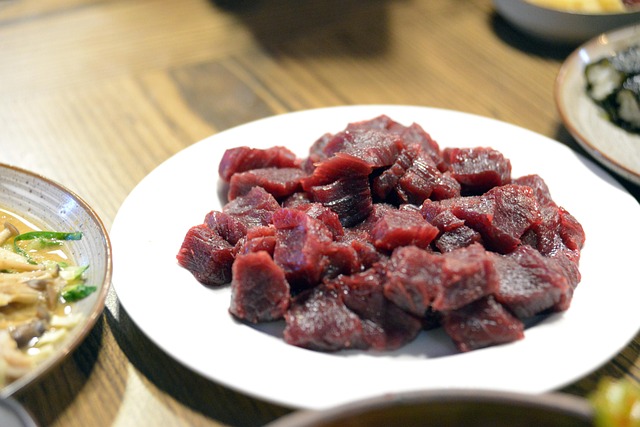
Fermenting beef reshapes smell, flavor, and appearance. Color changes from bright red to ruby or mahogany as myoglobin oxidizes and acids reduce pH.
Aromas shift from metallic, raw notes to a sharp tang, soft funk, and spice-forward heat.
Flavor settles into striated umami, lactic-acid zinginess, a hint of sugar sweetness, and pepper spiciness. Slices look matte, with specks of fat and tight grain.
The appeal is the flavorful, shelf-stable convenience of salami, bresaola, and pepperoni, rooted in Italian, Spanish, Turkish, and Korean history.
Serve thin on charcuterie, tuck into crusty sandwiches with pickles, or snack with nuts and olives.
Flavor Profile
Tang comes from lactic acid, produced by Lactobacillus and Pediococcus, which lowers pH to about 5.0-5.3. That acid brightens flavor and tames moldy undertones.
Spice blends—black pepper, garlic, fennel, paprika, chili—add heat or warmth, and light smoke adds phenolic depth. Umami intensifies while proteolysis releases glutamate and small peptides.
Slight sweetness can hang about when dextrose is partially unused, softening acid edges. This push-pull of acid, salt, umami, and fat creates a crisp, extended aftertaste.
Starter cultures direct results.
A powerful Staphylococcus carnosus enhances color stability and gentle cured nuances. Gentler acidifying cultures provide a more rounded tang.
In pepperoni, anticipate paprika, smoke, and lactic snap. In salami, seek out garlic, pepper, and nutty umami. Most would characterize prosciutto or Jamón Serrano as sumptuous, salty and fiercely umami.
Texture Changes
Drying draws out moisture and firms the matrix while concentrating flavor. Proteins denature and coagulate as pH drops, tightening the bind.
The shift is clear: from soft mince to a sliceable, chewy stick or whole-muscle slab that yields under the knife and then resists slightly on the bite.
Even fat slathered delivers a silky mouthfeel and prevents a mealy chew. When hard, smeared, or rancid, fat tastes waxy.
Uneven drying, case hardening, hollow centers, or sticky, mushy pockets indicate process problems often related to humidity, temperature, grind size, or starter performance.
Nutritional Impact
- Higher bioavailable amino acids and peptides from proteolysis
- Increased free amino acids that boost umami perception
- Potential probiotics from surviving lactic acid bacteria (product-dependent)
- Usually, microbes consume fewer lactose-like sugars, making it easier to digest.
- Note: Fermentation can form N-nitroso compounds. Risk context counts.
Other fermented meats like prosciutto and Jamón Serrano may have higher nutrient levels than non-fermented meat. They can be high in N-nitroso compounds and precursors.
Studies associate these compounds and mucin-depleted foci in rodents with colon carcinogenesis. Cooked, nitrite-treated, oxidized high-heme cured meat has stimulated such foci in rats.
They claim that some of those red meat–cancer links may be due to endogenous N-nitroso formation.
Offset your selections, serving size, and frequency.
Comparison (typical values vary by style):
- Fermented beef has higher free amino acids and peptides. It may contain probiotics, and nitroso formation is possible.
- Fresh beef: intact proteins; no fermentation byproducts; lower salt
- Processed non-fermented: added salt, phosphates; minimal microbial benefits
Common Fermentation Pitfalls
Fermented beef requires precise management of salt, temperature, pH, oxygen, and humidity.
About 90% of ferments that go wrong can be traced to preventable issues. Follow a specific recipe, record every batch, and track key variables.
Aim for 2 to 3% salt by weight, keep the temperature within your culture’s target range, and monitor pH with a calibrated digital meter.
Test strips can misread because of meat color. Headspace jars or casings should have headspace to accommodate the carbon dioxide.
During the most active days of fermentation, burp vessels as often as needed to prevent lid cracks or overflow.
If it develops fuzzy growth, vibrant colors such as blue, black, or pink, or a putrid smell, toss it out. Familiarity develops one batch at a time.
Mold Growth
White, fine, surface mold (typically Penicillium nalgiovense on dry-cured styles) can be normal and protective. Green, black, red, blue, or pink molds, or thick fuzzy mats, are red flags for contamination and toxin risk.
If you detect mold early on the surface, wipe it with a 1:1 vinegar-to-water mixture, then dry the surface and restore airflow.
Repeat only once; regrowth indicates a more serious moisture or cleanliness problem.
Maintain relative humidity at approximately 75 to 85 percent for whole-muscle cures to prevent case hardening and surface blooms.
Sanitize racks, blades, twine, and hands with food-safe sanitizer. Use fresh starter cultures and don’t cross-contaminate with bread or fruit ferments that drop wild spores.
If mold has crept into the cracks or fat seams, or remains after washing, discard it. No trimming can make a deeply colonized piece safe.

- MAX CAPACITY: platform 1: 11lb x 0. 1oz and 5000g x 1g platform 2: 16oz x 0. 001oz and 500g x 0. 01g
- UNIQUE FEATURE: Two-line backlit LCD readout calculates weights for both platforms at the same time
- TARE: Weigh all ingredients into one container by using the Tare feature to zero out weights in-between additions. Also works to zero the weight of any container before adding food
- BATTERY: Powered by three (3) AAA batteries, included. Scale can be powered off of will auto shut-off after a 3 minutes of no change inweight on the platform
- EASY TO CLEAN: Hand wash only; do not immerse in water or put in dishwasher; for best results, wipe with a damp cloth and dry thoroughly

Last update on 2026-10-31 / Affiliate links / Images from Amazon Product Advertising API
Off Smells
Sour, rotten, and ammonia smells indicate spoilage, protein decomposition, or the incorrect microbial population. Good ferments smell meaty, tangy, and clean.
Manage pH drop and temperature. Depending on the style, the inoculated beef must reach a safe pH, usually less than or equal to 5.3, which can take anywhere from days to weeks. Stay within the culture’s specified range.
Too warm encourages spoilage bugs, and too cold slows acidification. Check with a calibrated meter. Don’t rely on poor-man’s strips dyed with myoglobin. Vent spaces to avoid musty, trapped smells. A light breeze helps, but don’t draft-dry the surface.
If a batch reeks, throw it out. Smell is a quick and convenient safety test.
Texture Issues
Mushy or slimy typically indicates low salt or warm ferments. Recheck your dose: 2 to 3 percent salt by weight of total meat and fat, mixed until protein binds and the paste turns tacky.
Common Fermentation Pitfalls: keep the culture within its temperature band. Heat accelerates proteolysis and smear. Under-mixing or bad fat grind leaves pockets that ferment at different speeds.
Chill meat and fat to near 0 to 2 °C before grinding, use standard plate sizes, and mix until you observe clear myosin extraction. This develops structure and even moisture retention.
Over-drying is caused by low humidity or excessive airflow. Increase relative humidity to 75 to 85 percent and temper the fan. Case hardening seals in moisture and can sour the core.
If you keep having textural issues with sour rot, slime, or unusual colors, chuck it and review your technique. Get the salt, temperature, grind, and humidity right on the next batch.
Fermentation is slow work, and every batch teaches you something.
My Perspective on Fermentation
Here’s how fermenting beef marries art, science, and patience. I respect it as a way to guide bugs toward security, depth, and shelf life, honoring people who were hungry yet produced magnificent cuisine.
It all began in a garden. I had to find ways to preserve bountiful harvests, so I learned vegetable ferments early.
That same curiosity sucked me into meat, where control, record-keeping, and clean habits really do count. Fermentation creates original flavors that have no real ceiling, and that open range keeps me learning.
It ties in with everyday life. We all consume a bit of fermented food every day, and our own bodies operate on microbial chemistry, with trillions of cells living in us.
That bucks the 20th-century bacterial war. Not every microbe is an enemy; many are our allies if we provide the proper guidelines.
Flavor Artistry
Beef pairs well with salt, time, and targeted cultures, especially when it comes to creating delicious fermented meat products.
I build profiles in layers: base salinity at 2.5–3.0%, sugar for balance, black pepper and garlic for warmth, and cold-smoking for phenols if the style allows.
Then I choose the ferment path: fast, tangy semi-dry with Lactobacillus sakei, or slow, nutty, oxidized notes in a dried whole-muscle cut, which can lead to unique sausage recipes.
Personal taste and place color the outcome. A lean round with Tellicherry pepper that leans bright and clean. A marble-laden slice dusted with smoked paprika and coriander leans sweet-savory.
Humidity of 75 to 80 percent and a constant 12 to 14 degrees Celsius dictate texture and smell, which is crucial for successful sausage making.
Starters alter everything. L. Sakei gives a clean tang.
Staphylococcus xylosus enhances color and mild nutty notes. Koji on beef trim can drive umami and mild sweetness.
I sample small 500-gram batches to chart results, keeping in mind the importance of fresh ingredients.
I record grams, temperatures, water activity, and sensory notes, then swap wins and misses with comrades. Transparent communal sausage recipes advance the entire community, enhancing our collective knowledge of the fermentation process.
A Lost Skill
Industrial food systems flattened risk but slashed home skills. Meat fermentation succumbed to factories, while sauerkraut and kimchi stayed more home-ground.
Yet the same logic that preserved cabbage also saves beef: salt, acid, and controlled drying.
Bringing it back home calls for reverence for risks and solid methodology. When a pH drop is measured, water activity dips below 0.90, and the aroma stays clean and baby, the pride is REAL. It is slow work that teaches judgment.
These are ancestral techniques. Families once handed them down by doing.
Teaching young makers with safe, stepwise plans and simple tools keeps that line alive.
Future Potential
Demand for natural, artisanal meats will likely rise as people seek fewer additives and clearer labels. We already see it in markets that prize region-linked styles and transparent sourcing.
New strains and tools can broaden possibilities. Custom Pediococcus blends allow for rapid, uniform acidification. Molds are chosen for saffron-like hints. Intelligent rooms with constant ventilation and records are important.
Attention is crucial, and development is present.
Trim fermented beef on boards! Use the shaved dried topside to fold into noodle soups.
Sprinkle tangy semi-dry crumbles into rice bowls.
Pair thin slices with citrus, herbs, and raw veggies for balance.
It transcends cuisines.
Continue educating yourself from reliable sources. Then experiment, quantify, and disseminate.
Fermentation has stood the test of time. Its scope is unlimited.
Our Conclusion
To conclude, fermenting beef is an art that requires expertise, attention, and patience. The actions seem simple, but every one matters.
Salt rate, grind size, pH curve, and cold chain all steer safety. A sharp knife, clean tubs, a good scale, a chill fridge at 0-4 °C, and a pH meter give you control.
Begin with just a little. Keep track of each batch. Note pH at mix, 12 hours, and day 2.
The taste develops from a gentle tang to a rich funk. Imagine bresaola that’s light on the cure or a lean stick with 2.5% salt and a T-SPX start.
Serve a wafer-thin slice with crunchy salad or steamed rice.
Want to experiment with a small batch? Leave your info and objectives, and I’ll help you adjust it.
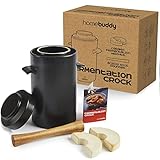
- 🥇 SAFE, STURDY, & VERSATILE – Made of natural top-quality food-grade double-glazed ceramic, this sturdy pickle crock won’t absorb unwanted smells or tastes. Use it as a sauerkraut kit, Korean kimchi pot, or kombucha crock!
- 💯 ASSURED RESULTS – This fermenting vessel’s airtight water seal allows gases to escape freely, while preventing outside air from getting in. The anaerobic kimchi jar’s environment & its deeper water groove ensures perfect fermentation every time.
- 🖤 INTERIOR PIECE – Unlike your useful but less attractive kitchen tools, you won’t want to hide away your kraut crock! Ceramic stoneware crock finishes can enhance your rustic, minimalistic, or boho kitchen style!
- ✅ ERGONOMIC & EASY TO USE – With an optimal fermentation weight balance & large comfortable handles, these ceramic pickle jars with lids are extremely ergonomic and easy to lift, maneuver, & clean.
- 📕 ADDED POUNDER & RECIPES – This wide-base natural acacia wood sauerkraut pounder, included with your pickle pot makes crushing tough cabbage a breeze. And our recipe book will inspire both fermentation novices & pros alike!
Last update on 2026-10-31 / Affiliate links / Images from Amazon Product Advertising API
Frequently Asked Questions
Is it safe to ferment beef at home?
Yeah, with limited constraints. Employ fresh, quality beef, starter cultures, and normal salt at two to three percent, along with refrigeration when needed. Maintain sterilization and focus on the fermentation process. If you’re new, start with tried-and-true sausage recipes.
What’s the difference between fermenting and dry-aging beef?
Fermentation uses beneficial microbes and salt to acidify and preserve meat, making it an essential part of home meat processing and sausage-making. It aims for a lower pH and a unique zing, contributing to delicious, novel meats like fermented products. Dry-aging, based on controlled dehydration and enzymes, concentrates flavors differently than the fermentation process used in cured sausages.
What temperature and pH should I aim for?
Fermented beef products typically ferment at 18–24°C initially. Following this, they cure and dry at 10–15°C with 75–85% relative humidity. The target pH should reach 5.3 or lower within 24–72 hours, depending on the specific sausage recipe and culture used.
Do I need a starter culture, or can I rely on wild fermentation?
Employ a trusted starter culture for your home meat processing. It lowers risk, speeds acidification, and improves uniformity when fermenting beef.
How much salt should I use when fermenting beef?
To ensure safe fermentation in your sausage recipes, use 2 to 3 percent salt by weight of the meat, such as pork or venison. This salt not only regulates water activity but also promotes fermentation, enhancing the flavor of your novelty meats.
What equipment is essential for safe beef fermentation?
Employ an accurate scale, sterilized vessels, razors, and a meat mill if crafting sausages. A pH gauge, thermometer, and hygrometer are essential for fermentation, along with food-safe gloves and starter cultures for home meat processing.
How do I know if my fermented beef has gone bad?
Use your eyes, nose, and knife to ensure safety during home meat processing. Indicators of spoilage include slimy green or black mold, a rancid smell, or a high pH that doesn’t drop as expected. If you see these signs, it’s best to throw it out.


One Comment