What Most People Get Wrong About Fermentation
Fermentation is one of the oldest technologies humans have ever used, older than agriculture in some estimates, and yet most of us walk past it every day without a second thought.
It’s in the bread we toast, the coffee we brew, the cheese on our sandwich, the pickle on the side. For something so woven into daily life, it remains strangely misunderstood.
People tend to think of fermentation as either a quaint culinary hobby or a slightly dangerous kitchen experiment that might poison them.
The truth sits somewhere far more interesting: fermentation is a living collaboration between us and the invisible world of microbes, and understanding it can genuinely change how you eat, how you feel, and how you think about food itself.
What follows is a deeper look at the things people most often don’t know about fermentation, from the nutrition science to the surprisingly forgiving process of doing it yourself.

- Complete All-in-One Fermentation Kit — Start Fermenting Immediately. This 2-pack includes everything you need: two 1-gallon wide-mouth glass jars, two 3-piece airlocks, two glass fermentation weights, silicone hole grommets, and silicone gaskets. No need to buy accessories separately. Just add vegetables, salt, and water — your first batch of sauerkraut, kimchi, or pickles is ready to start the moment you unbox.
- Glass Weights Keep Ingredients Submerged — Proper Brine Coverage, Better Results. The included glass weights press cabbage, cucumbers, and other ingredients below the brine line — the single most important factor for properly submerged fermentation. Each jar comes with one weight. For recipes with large vegetable pieces that tend to float, you can stack both weights in a single jar for extra holding power. No more fishing out floating top layers.
- 3-Piece Airlock — Automatic Gas Release, No Daily Burping Required. The water-filled airlock vents carbon dioxide automatically while creating a sealed environment that keeps outside air from entering the jar. This means you can set it and forget it — no daily lid-burping routine. Note: when opening the jar mid-fermentation to check progress or add ingredients, remove the airlock first to avoid spilling the water inside it, then reattach after closing.
- Clear Lead-Free Glass — Monitor Fermentation Progress at a Glance. Made of clear, lead-free glass designed for food contact. The transparent walls let you watch your ferment develop without opening the jar — check brine levels, observe bubble activity, and monitor color changes throughout the process. For best results, wash by hand with warm soapy water. If you choose to prepare the jar with boiling water, always let it cool naturally before use; sudden temperature changes (thermal shock) can crack any glass container, not just this one.
- 1 Gallon Wide-Mouth Jars — Big Batches, Easy Packing, Simple to Clean. Each jar holds 1 gallon (3.8 liters) — enough capacity for roughly three shredded cabbages in a single batch of sauerkraut. The wide 4.25-inch mouth lets you pack vegetables tightly with your fist for proper brine extraction, and your whole hand fits inside for cleaning. Suitable for sauerkraut, kimchi, dill pickles, kombucha, mead, cider, sourdough starter, and lacto-fermented vegetables of all kinds.
Last update on 2026-10-01 / Affiliate links / Images from Amazon Product Advertising API
1. Fermentation Makes Nutrients More Available to Your Body
We tend to judge food by what goes into it, the vitamins and minerals listed on a label. But nutrition is only half about what’s in the food and half about what your body can actually absorb. This is where fermentation quietly does some of its most valuable work.
During fermentation, microbes break down complex compounds in food into simpler forms. In the process, they produce short-chain fatty acids and begin what you might call a pre-digestion of the food.
The tough cell walls, the anti-nutrients like phytic acid that bind up minerals, the large proteins that are hard to break down- all of these get partially dismantled before the food ever reaches your mouth.
The result is that the iron, zinc, magnesium, and other minerals locked inside grains, legumes, and vegetables become far more bioavailable, meaning your body can actually take them up and use them.
There’s a second dimension to this too. Fermented foods deliver their benefits as part of a whole-food matrix rather than an isolated pill.
A spoonful of sauerkraut or a glass of kefir carries not just probiotics but the fiber, enzymes, vitamins, and organic acids that microbes create alongside them.
That variety is something a single-strain supplement struggles to match, because it arrives as an ecosystem rather than a single ingredient.
2. Fermented Foods Are the Original Probiotics
Long before the word “probiotic” appeared on yogurt cups and supplement bottles, people were eating fermented foods teeming with beneficial bacteria. Sauerkraut, kimchi, miso, kefir, traditional pickles, and countless regional ferments were the original delivery system for these microbes, and arguably still the best one.
The advantage of a fermented food over a capsule comes down to diversity and context. A commercial probiotic supplement typically contains a handful of carefully selected, lab-grown strains, often just a few species chosen because they survive manufacturing and shelf storage.
A living ferment, by contrast, can host dozens of different microbial species that arose naturally as the food transformed. This broader, more diverse community more closely resembles the complexity of a healthy human gut, which is home to hundreds of species working together.
When you eat a ferment, you’re not introducing one soloist; you’re inviting an entire orchestra.
3. Homemade Ferments Are Custom-Tailored to You
Here’s an idea that surprises almost everyone the first time they hear it: the ferment you make in your own kitchen is, in a real sense, personalized to you and your environment.
Wild fermentation draws on the microbes already present on the vegetables you’re using, on your hands, in the air of your home, and in your local surroundings. If you grow your own produce, the cabbage or cucumbers you pull from the garden carry the microbial signature of your own soil.
As the ferment develops, it cultivates a blend of organisms native to your immediate world. That means the probiotic profile of your homemade kraut is subtly different from anyone else’s on the planet, and it’s populated by microbes your body is already likely to encounter and adapt to.
In a food landscape built on standardization, a jar of ferment on your counter is refreshingly and beneficially unique.
4. Fermentation Mimics Nature’s Symbiotic Layers
Fermentation isn’t an artificial process we invented so much as one we noticed and learned to steer. In nature, organisms live in symbiotic relationships, layered systems in which different species support one another’s survival.
A healthy soil, a cow’s rumen, the human gut, a rotting log on the forest floor- all of these are dense webs of microbial cooperation.
When you ferment food, you’re recreating a small version of that natural symbiosis in a jar. Different microbes take turns dominating the environment, each one changing conditions in ways that make room for the next.
Early acid-producing bacteria lower the pH, which suppresses spoilage organisms and clears the stage for the hardier, beneficial microbes that follow. It’s a succession, much like the way a meadow gives way to shrubs and then to forest over time.
Understanding fermentation as a mimicry of these natural symbiotic layers helps explain why the results are so nourishing: you’re eating food that has undergone the same kind of collaborative transformation that sustains living systems throughout nature.

- YOUEON set of 9 glass fermentation weights measure 2.75 x 1.4 inches(D x H) and each weighs about 7oz. Round shape fits most standard wide-mouth Mason jars, pickling jars and fermenters. And sufficient quantities can meet your basic demands
- Heavy Glass: Made of high quality glass, these weights are thick and heavy. Lead free and non-porous so it never absorbs food odors, flavors, or colors. Safe to touch food
- Sturdy and Effective: Our fermentation weights hold the vegetables under the brine and do a great job weighing them down. The diamond shaped bulge handle design makes it easy to insert and remove these weights from your canning jars without using tools, and provides a much sturdier solution than other grooved weights
- Use Occasions: The glass fermentation weights set is great for Sauerkraut, pickle, Kimchi, and any vegetable and fruit ferments. Except for fermentation and pickling, heavy and transparent appearance allow you to use it for carving,sewing and other DIY projects
- Durable and Easy to Clean: Fits perfectly with typical wide-mouth preserving jars, which are perfect for small fermentation volumes and improve the overall lactic fermentation process. Easy to clean, dishwasher and hand washable
Last update on 2026-10-01 / Affiliate links / Images from Amazon Product Advertising API
5. It’s Safe When You Trust Your Senses
The single biggest barrier to fermenting at home is fear. We’ve been trained by modern food culture to distrust anything involving bacteria, and the idea of deliberately letting food sit out to “rot” feels reckless.
In reality, vegetable fermentation is one of the safest food-preservation methods there is, and your own senses are remarkably reliable guides.
A properly progressing ferment protects itself. As beneficial bacteria produce lactic acid, they create an acidic, low-oxygen environment that is genuinely hostile to the pathogens that cause foodborne illness.
This is why traditional cultures relied on fermentation for centuries without refrigeration or lab testing. The practical rule is to trust what you can see and smell. A good ferment smells sour, tangy, pleasantly pungent.
If something looks genuinely wrong, fuzzy colorful mold across the surface, or smells putrid, rotten, or of decay in a way that makes you recoil, listen to that instinct and don’t eat it. Those clear warning signs are uncommon, and our senses evolved precisely to catch them.
Trusting them is not naïve; it’s how humans safely fermented food for thousands of years.
6. Fermentation Creates Nutrients That Weren’t There Before
Most food processing subtracts. Fermentation is unusual in that it adds. The microbes doing the work are living organisms with their own metabolism, and as they feed and multiply, they synthesize compounds that simply did not exist in the raw ingredients.
The most celebrated example is the B vitamins. Fermenting microbes produce various B vitamins, including forms of B12 in some ferments, along with folate and riboflavin, enriching foods that started out modest.
Certain ferments also stabilize or increase vitamin C, which is one reason fermented cabbage was historically prized by sailors and northern communities as a defense against scurvy through long winters when fresh produce was scarce.
Beyond vitamins, fermentation generates a wealth of digestive enzymes and, of course, the probiotic organisms themselves. So a jar of fermented food is not just preserved food; it is food that has become nutritionally richer than when it went in.
7. Fermented Foods Are Living Foods
There is a quality to fresh, living food that’s hard to quantify but easy to sense, and it’s exactly the quality our modern food system tends to strip away.
Produce is often picked before it is ripe, shipped thousands of miles, stored for weeks, and processed in ways that trade vitality for shelf stability. By the time much of it reaches us, it is nutritionally a shadow of what it once was.
Fermented foods push back against this. A living ferment is biologically active, full of metabolizing microbes and the fresh compounds they generate.
Eating it reintroduces a kind of liveliness to the diet that long supply chains and heavy processing have drained out. This is part of why people so often describe feeling different, lighter, more energized, more settled, when they start eating fermented foods regularly.
You’re no longer eating only inert, shelf-stabilized matter; you’re eating something that is, in a meaningful sense, still alive.
8. Fermentation Is a Powerful Preservation Method
Before refrigeration, humanity faced a universal problem: how to keep the harvest’s abundance from rotting before the lean months arrived?
Fermentation was one of the great answers, and it remains one of the most elegant.
By encouraging beneficial microbes to acidify and transform food, fermentation halts the spoilage that would otherwise set in. A head of cabbage keeps for a week or two; turned into sauerkraut, it keeps for many months.
But fermentation does something salting or freezing can’t: it improves the food as it preserves it. The same microbial activity that protects the food also deepens its nutrition and conjures entirely new flavors: the complex sourness of kimchi, the umami depth of miso, the sharp brightness of a good pickle.
Preservation and enhancement happen in the same act. That combination, keeping food and making it better, is why fermentation endured as a cornerstone of cuisines across every continent.
9. It’s a Low-Tech Process Anyone Can Do
People often imagine fermentation requires specialized equipment, precise temperature control, and sterile laboratory conditions.
This misconception keeps many would-be fermenters on the sidelines. The reality is almost comically simple.
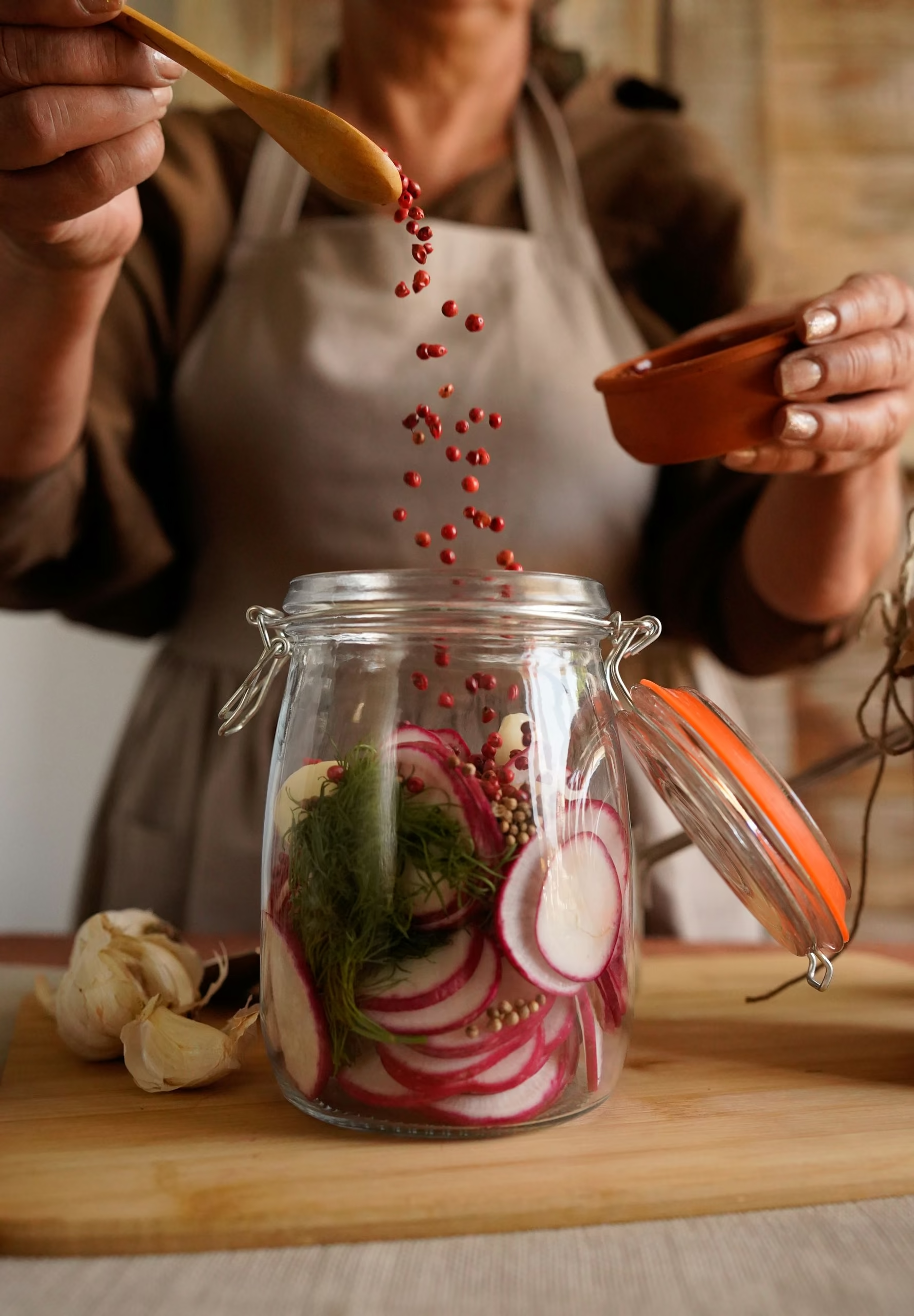
To ferment vegetables, you need remarkably little: a clean glass jar, some salt, a cloth towel or lid, and a rubber band.
That’s genuinely close to the whole list. You don’t need to sterilize anything, and in fact you shouldn’t want to, because the whole point is to let beneficial microbes flourish rather than wiping every organism away.
Clean is enough; sterile is unnecessary and even counterproductive. Chop your vegetables, salt them, pack them under their own brine so they stay submerged, cover the jar to keep out debris while letting gases escape, and wait.
The microbes do the labor. Fermentation is one of the few genuinely ancient technologies that needs no upgrade to work beautifully in a modern kitchen with nothing but what’s already in your cupboard.
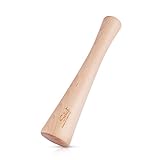
- Safe And Durable: Our kraut pounder is one solid piece of food grade beech wood, making it not easy to crack and split and non-toxic into food.
- Heavy and Effective: Strong enough to pound cabbages or other pickle veggies out juice and tightly pack them into crocks and jars for best fermentation- faster and easier than hands and spoon.
- EXCELLENT UNIVERSAL FIT: Well-designed 2 ends size allow it fit perfectly into wide and regular mouth mason jars, as well as fido style jars and ceramic fermentation crocks.
- Alluring Design and Shape: Finished in ideal length 12″, neither too long waste space nor too short scrape knuckles. Comfortably hold it thanks to the specially curved shape.
Last update on 2026-10-01 / Affiliate links / Images from Amazon Product Advertising API
10. Wild Fermentation vs. Cultured Fermentation
As you get into fermentation, you’ll encounter two broad approaches, and understanding the difference helps you choose the right one for what you’re making.
Wild fermentation relies entirely on the microbes naturally present on the food and in the surrounding environment. You add no starter; you simply create the conditions, usually salt and an oxygen-poor setting, that favor the good microbes already there.
Sauerkraut and many traditional pickles work this way. The results carry that personalized, place-specific character discussed earlier, though they can vary somewhat from batch to batch.
Cultured fermentation, by contrast, introduces a specific starter culture: a defined community of microbes, such as a kefir grain, a kombucha SCOBY, a yogurt culture, or a sourdough starter. Because you’re seeding the ferment with a known population, the results are more predictable and consistent from one batch to the next.
Neither approach is superior in the abstract; wild fermentation offers spontaneity and local character, while cultured fermentation offers reliability and control. Many home fermenters happily use both, depending on the food and the outcome they’re after.
11. The Quiet Power of Short-Chain Fatty Acids
Short-chain fatty acids deserve a section of their own, because they’re one of the most important and least understood outputs of fermentation, both in the jar and inside your own gut.
Butyrate, along with acetate and propionate, is a short-chain fatty acid produced when microbes break down fibers and other compounds.
In the fermentation vessel, this microbial activity performs part of the digestive work in advance, breaking food into smaller pieces so your body can absorb nutrients with less effort and energy. But the story continues inside you.
When you eat fiber-rich and fermented foods, the bacteria in your own colon produce short-chain fatty acids as well, and butyrate in particular is the preferred fuel source for the cells lining your gut. It helps maintain the integrity of the gut barrier and supports a calm, well-regulated intestinal environment.
So short-chain fatty acids are a bridge between the ferment and your body, easing digestion in both places.
12. What Probiotics Actually Do
The word “probiotic” gets used so loosely in marketing that its actual meaning has blurred. Properly defined, probiotics are live microorganisms that, when consumed in adequate amounts, confer a health benefit.
The key word is beneficial; not every microbe qualifies, only those that support your wellbeing.
Their central role is to help maintain a healthy microbial balance in the gut. Your digestive tract is home to a vast community of microbes, some helpful, some neutral, some potentially troublesome, and health depends heavily on keeping that community in good proportion.
Probiotics support the helpful side of that balance. From there, their influence radiates outward in ways researchers are still mapping: the gut microbiome communicates with the immune system, participates in the production of neurotransmitters, helps regulate inflammation, and even sends signals along the gut-brain axis that can affect mood and cognition.
A well-populated, balanced gut is increasingly understood to be foundational to whole-body health, not just digestion.
13. A Balanced Gut Can Change What You Crave
One of the most striking and underappreciated effects of a healthy gut microbiome is its influence over what you actually want to eat.
Most people assume cravings are purely a matter of willpower or habit. A growing understanding of the microbiome suggests otherwise.
The microbes in your gut are not passive passengers; they have preferences, and they can influence your appetite to serve their own needs.
A gut dominated by organisms that thrive on sugar and refined carbohydrates may nudge you toward exactly those foods, reinforcing the cycle.
Shift the balance toward a diverse, well-nourished community of beneficial microbes, and the cravings often shift with it. People who eat fermented foods and fiber consistently frequently report that their pull toward junk food fades, and that vegetables, whole foods, and less sugar start to feel genuinely more appealing.
In other words, tending your gut can quietly recalibrate your desires, making better dietary choices feel less like a battle and more like a preference. It’s one of the most encouraging feedback loops in all of nutrition.
14. About Over-Fermentation
It’s worth being honest about the downsides, because there aren’t many and they’re mild. Over-fermentation, letting a ferment go much longer than intended, or eating a lot of very active ferment when your gut isn’t used to it, is the most common one, and it’s generally harmless.
Over-fermentation usually produces a change in texture and flavor, greater sourness, softer vegetables, and, if you eat a large amount, some temporary digestive complaints.
Bloating and gas are typical symptoms, arising simply because a flood of active microbes and their fermentation byproducts is more than an unaccustomed gut can process at once. These effects are almost always benign and pass on their own.
The practical lesson is to start small and let your system adjust rather than diving into large servings on day one. Discomfort from over-fermentation is a signal to ease off the throttle, not a sign of danger.
15. Give It a Chance, Even If the Taste Surprises You
Fermented foods can be an acquired taste. The sourness of sauerkraut, the funk of a strong kimchi, the tang of kefir- none of these are what a palate raised on sweet and salty processed food expects, and it’s completely normal to find them a little strange at first.
That first reaction is not a verdict; it’s just unfamiliarity.
The encouraging news is that taste is trainable, and the gut plays a role in training it. As your microbiome shifts in response to regular fermented foods, your preferences tend to follow. Flavors that seemed sharp or off-putting begin to taste bright and satisfying.
Many devoted fermentation lovers began as skeptics who forced down their first few spoonfuls and then, weeks later, found themselves genuinely craving them. So the advice is simple: give it a real chance.
Try different ferments, since there’s enormous variety, and keep at it past the initial unfamiliarity. The health benefits accrue whether or not you love the taste on day one, and the taste has a way of catching up.
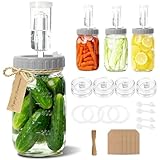
- 【Complete Fermentation Kit】This all-in-one fermentation kit includes four 32 oz mason jars and heavy-duty glass fermentation weights made from food-safe, lead-free, non-porous glass that never absorbs odors, flavors, or colors. The set also includes durable fermentation lids, dual-channel airlocks, and everything you need for making kimchi, sauerkraut, pickles, and more. Includes 20 date-and-note tags with strings for labeling each fermentation session.
- 【Plastic Fermentation Lids, No Rust, No Silicone Wear】Designed as an alternative to metal lids, our food-safe plastic fermentation lids eliminate rust concerns while reducing stress on silicone grommets. This thoughtful design helps maintain a secure seal and extends the lifespan of every fermentation jar in the set.
- 【Ferment & Store with One Lid】Our plastic fermenting lids let you switch effortlessly from fermenting to storage. Simply remove the airlocks and insert the silicone stopper. Each jars instantly converts into a sealed mason jar, giving you a smooth ferment-to-store workflow without changing lids.
- 【Wide-Mouth Mason Jar Design】Each 32 oz fermentation jar features a wide 3.4″ opening for easy filling, packing, and cleaning. Clear ml and oz markings help you measure ingredients accurately and monitor fermentation progress.
- 【Upgraded Airlock & Weight System】Our dual-channel airlocks work with the tight-sealing plastic fermentation lids to maintain a stable, low-oxygen environment. The lead-free glass fermentation weights are non-porous and food-safe, keeping vegetables fully submerged for safe, consistent, and flavorful results in every batch.
Last update on 2026-10-01 / Affiliate links / Images from Amazon Product Advertising API
16. A Little Every Day Goes a Long Way
If there’s one practical takeaway from all of this, it’s that you don’t need to overhaul your diet to benefit from fermentation.
The gut responds to consistency far more than to intensity, which means a small, daily habit outperforms an occasional feast.
A forkful of sauerkraut with lunch, a small glass of kefir or kombucha, a spoonful of miso stirred into broth, a bit of kimchi alongside dinner- any of these, done most days, is enough to keep a steady supply of beneficial microbes and their byproducts flowing into your system.
People who build this small daily ritual often notice the effects within a few weeks: smoother digestion, steadier energy, a lift in mood, and a harder-to-name sense of well-being.
Because the amount is small, it’s easy to sustain, and sustainability is what turns a nutrition idea into an actual result. Fermentation rewards the patient and the consistent, and it asks very little in return.
Frequently Asked Questions
Is fermented food safe to eat, or could it make me sick?
Vegetable fermentation is one of the safest preservation methods. As beneficial bacteria produce lactic acid, they create an acidic, low-oxygen environment that pathogens can’t survive in, which is why cultures relied on it for centuries without refrigeration.
Your senses are a reliable guide: a good ferment smells sour and tangy, while fuzzy, colorful mold or a putrid, rotten smell is a clear sign to throw it out. Those warning signs are uncommon and easy to spot.
How is a fermented food different from a probiotic supplement?
A supplement usually contains a handful of lab-grown strains chosen for shelf stability. A living ferment can host dozens of microbial species that arose naturally as the food transformed, along with the fiber, enzymes, vitamins, and organic acids produced alongside them. You’re getting a diverse ecosystem in its whole-food context rather than a few isolated strains in a capsule.
What equipment do I need to start fermenting at home?
Remarkably little: a clean glass jar, some salt, a cloth towel or lid, and a rubber band. You don’t need to sterilize anything, and you shouldn’t want to, since the whole point is to let good microbes flourish. Chop your vegetables, salt them, pack them under their own brine so they stay submerged, cover the jar, and wait. The microbes do the rest.
How much fermented food should I eat each day?
A small amount daily beats an occasional large serving. On most days, a forkful of sauerkraut, a small glass of kefir or kombucha, a spoonful of miso, or a bit of kimchi is enough to keep beneficial microbes flowing into your system. Start small, especially at first, and let your gut adjust.
Can eating too much fermented food cause problems?
Over-fermentation and large servings are generally harmless but can cause temporary bloating or gas, especially if your gut isn’t used to them. This simply means a flood of active microbes is more than an unaccustomed system wants to process at once. The effects pass on their own; the fix is to ease back and build up gradually.
I don’t like the sour taste. Will that change?
Very likely, yes. Fermented flavors are unfamiliar to a palate raised on sweet, salty processed foods, but taste is trainable. As your microbiome shifts with regular fermented foods, sharp flavors start to taste bright and satisfying. Many devoted fermentation fans began as skeptics. Try different ferments, since there’s huge variety, and keep at it past the first few servings.
What’s the difference between wild and cultured fermentation?
Wild fermentation relies on microbes naturally present in the food and your environment, with no added starter, yielding results with a local character that vary a bit between batches. Cultured fermentation uses a specific starter, such as a kefir grain, kombucha SCOBY, yogurt culture, or sourdough starter, for more predictable, consistent results. Neither is better in the abstract, and many people use both.
Does fermentation actually add nutrients, or just preserve food?
Both. Unlike most food processing, which subtracts, fermenting microbes synthesize compounds that weren’t in the raw ingredients, including various B vitamins, folate, and digestive enzymes, and they help preserve vitamin C (famously protecting sailors from scurvy). It preserves food and makes it nutritionally richer at the same time.
How soon will I notice a difference?
Many people who build a small daily habit notice changes within a few weeks: smoother digestion, steadier energy, a lift in mood, and a general sense of feeling well. Because the amount is small, the habit is easy to sustain, and consistency is what produces results.

- Complete Fermentation Kit: Includes 2 glass fermentation jars, 2 fermentation weights, 2 airlocks, and 4 silicone caps, including 2 extra caps for backup or replacement
- Certified Material: Made from clear, thick, lead-free glass for durability and easy visibility. Ideal for small-batch fermentation and testing new recipes
- Easy to Use & Clean: The 3-piece airlock lets fermentation gases escape automatically, so no daily burping is needed. Simply pack, ferment, and enjoy
- Airtight & Leak-Resistant: Glass lid with silicone sealing gasket, silicone airlock cap, and SUS304 stainless steel hinged clip helps create a secure seal for fermentation
- 3.3″ Wide Mouth & Heavy Weights: Wide-mouth opening makes filling and cleaning easy. The 3″ diameter, 7–8 oz glass weights help keep vegetables submerged under brine for better fermentation results
Last update on 2026-10-01 / Affiliate links / Images from Amazon Product Advertising API
Our Closing Thoughts
Fermentation sits at a rare intersection of the ancient and the cutting-edge. It’s a practice our ancestors relied on for survival, and it’s also a subject that modern microbiome science is only now catching up to and validating.
What people most often don’t know is how forgiving, how nourishing, and how quietly transformative it can be.
It makes nutrients more available, delivers a diversity of beneficial microbes no supplement can match, creates new vitamins and enzymes, preserves food while improving it, and does all of this with nothing more than a clean jar, some salt, and a bit of patience.
You don’t need special equipment, a science degree, or a leap of faith, only a willingness to trust the process, trust your senses, and start small.
A little fermented food each day is one of the simplest, most time-tested investments you can make in your own health, and the invisible world of microbes will do most of the work for you.
This article is for general educational purposes and isn’t a substitute for personalized medical or nutritional advice. If you’re pregnant, immunocompromised, or managing a health condition, check with a qualified professional before adding fermented foods to your routine.


2 Comments